Commentary on Williamsburg's Recent FY25 Annual Financial Report
Some see smooth sailing, but others warn of storm clouds ahead

(Editor’s Note: The opinions expressed by the writer are not necessarily those of the Williamsburg Independent.)
Each year the City of Williamsburg prepares a financial and statistical report for the fiscal year running from July 1, 2024 to June 30, 2025. At its last meeting in December, the City Council received and approved the Annual Financial Report.
A summary in the annual report states that the “economy of the City of Williamsburg remains fundamentally strong, though there is uncertainty around the potential economic impacts of recent changes in federal policy and inflation. Historically, the City’s economy, driven primarily by tourism and higher education, has shown resilience in similar periods of uncertainty. Nonetheless, the City’s financial policies and budgetary approach for the upcoming fiscal year and beyond remain conservative and committed to providing high-quality, core services while minimizing the financial impact on residents, businesses, and employees.”
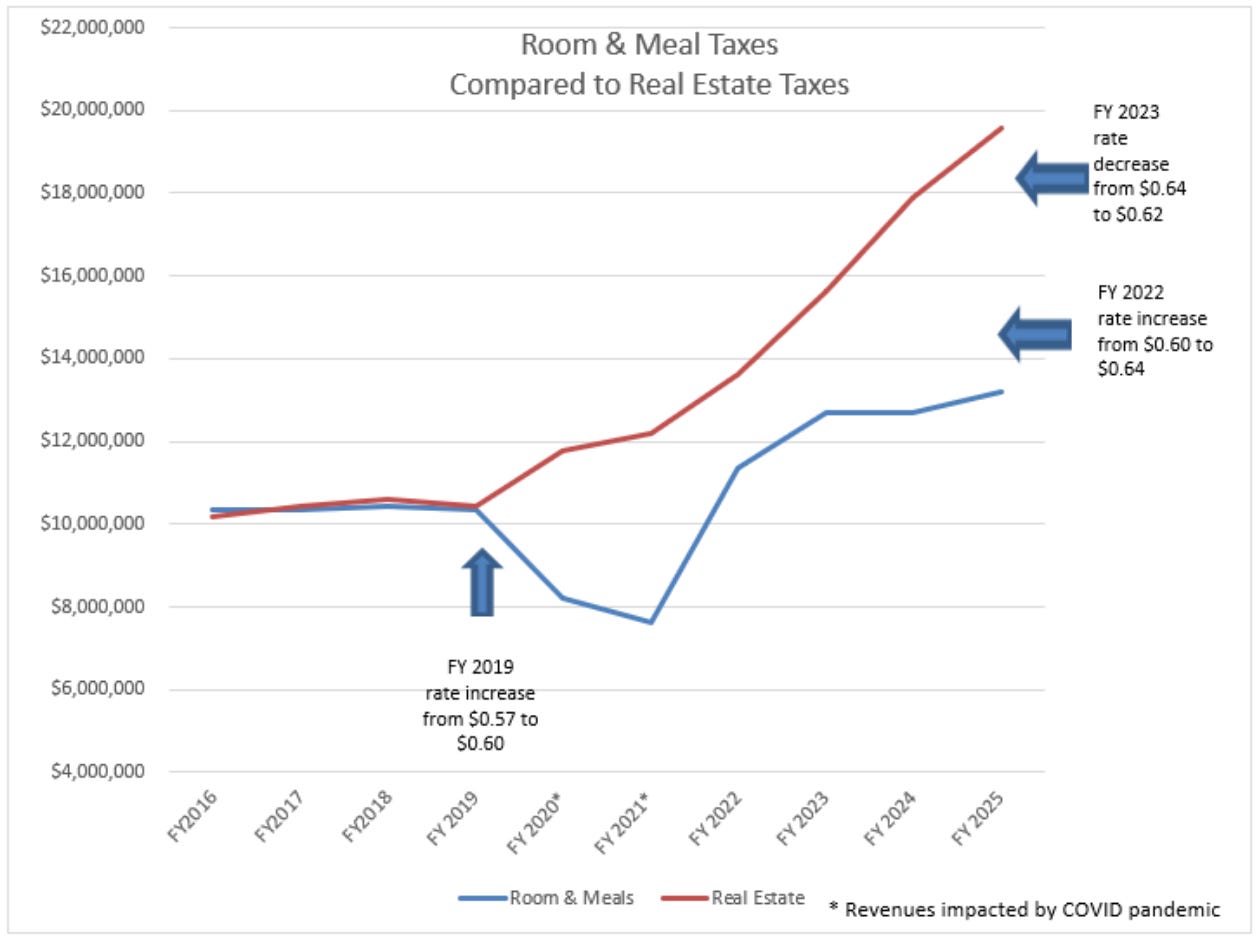
I may be entirely wrong, but in my opinion, the City will be facing a financial reckoning in the next few years. This year’s Budget bakes in increases in the meals and hotel tax rates, plus adds a new admissions tax. While delayed, the new taxes retroactive to January 1, 2026 seem likely to be implemented by the City Council soon. Combined with the 250 America Celebration this year, increases in tourism and related tax revenues should provide a boost to city coffers, likely pushing back potential real estate tax increases to FY2028.
In talking with other City residents, the higher spending and costs brings a mixed reaction. Some residents appreciate and enjoy the services the City provides and acknowledge that they come at a cost. Others have seen their real estate taxes increase dramatically, along with other costs, argue for the City to curb future spending. Whatever your view, it is important to voice your opinion and be heard, and most City Council meetings include public comment periods.
While the report runs several hundred pages, I present some of the more interesting and relevant facts below.
Population has been flat for the last 10 years
We’re not likely to grow our way out of future cost increases. Our population has been steady now for the last 10 years with only the W&M student population growing. We’ve maxed out in terms of hotel and meals tax rates, so it is likely that the non-student resident population and businesses will bear the brunt of future growth in City spending through increases in real estate taxes.
The last population data in the report is shown for FY2024 and reflected a City population of 15,690, including William & Mary students (generally estimated to include 6,000 to 6,500 students). The 2020 U.S. Census revealed a City population of 15,425 and projects a population of 16,030 for 2025. The slight increase in population is probably attributed to the growth in the W&M student population over the last few years. It’s possible then that the non-student population is actually decreasing in real terms.
This is further revealed by the hard numbers reported by the WJCC Joint School system which show public school enrollment figures of 11,379 students for 2025 up only 76 students from 11,303 in 2016.
Revenues (largely from taxes) increased faster than inflation and population growth
While the population increased by only 4% since 2020, total revenues increased by 51% over this 5-year period. This increase was led by real estate and personal property tax increases which increased by 64%. Hotel, motel, and other business taxes increased 45% over the 5-year period.
These hotel, motel and business taxes represented 40% of City Government revenues in 2025. Without much of an industrial base, these revenues, largely from tourism and W&M visits, underpin much of City spending. These taxes increased only $377,000 or 1.4% in 2025 over 2024 reflecting a lull in tourism. The City responded in this year’s Budget with proposed hotel and meals tax increases and a new admissions tax to go into effect in January 2026. City businesses argued that these tax increases will decrease their competitiveness with comparable businesses in James City and York County.
Per Capita spending more than doubles
Per capita spending by the City increased from $2,909 in 2020 to $4,871 in 2025, an increase of 64%. Much of the additional spending has been on capital projects like the new fire and police stations. Adjusting for capital projects, the spend increased 49.5% in 2025 over 2020. The areas of the greatest increase in spending were General Government spending, which was 87% higher in 2025 over 2020, followed by public safety spending which was 46% greater in 2025 than 2020. Surprisingly, education spending increased only 11.8% in 2025 over 2020; however, this is slated to increase dramatically under the new WJCC Schools Agreement.
Capital Projects largely funded by debt
Despite the significant increases in revenues, capital projects were largely funded by debt which is being repaid with interest. Total Primary Government debt increased from $21 million in 2020, or $1,312 per capita, to $49.2 million in 2025, or $3,258 per capita. The increase in debt in recent years largely funded the new fire and police stations.
The Report noted that in November 2025, the City Council approved the borrowing of another $10 million as the first installment of a planned $27 million borrowing to fund the remediation of the City’s aging water treatment facility, add a new storage tank, and replace the leaking water distribution system.
The City’s debt does not include the $79 million in bonds and notes issued by the Historic Triangle Regional Facilities Authority (HTRFA) for the Regional Sports Center. The City has pledged to appropriate the majority of the funds to cover the debt service for this debt which will be in millions of dollars over future years. The City’s FY2026 Budget includes over $7 million in payments to the HTRFA this year. Surprisingly, the City makes no mention of these payments or its sizeable appropriation pledge for future years in either its audited financial statements or the Annual Financial Report.
Fixing the water system
City residents have already experienced a 30% increase in water rates this year, and the City signaled that rates could actually triple over the next 10 years as it remediates an aging water system and replaces leaking water distribution lines.
Increasing school funding
It appears that the new WJCC Joint School Agreement will increase Education spending in the future. Also, the payments to the HTRFA will increase in future years. We hope this venture is successful.
Building a new library
The new library will ultimately cost about $50 million including interest on the debt. The City is exploring financing this over 25 years which will reduce the annual debt service but increase the total interest paid. And annual library operating expenses will inevitably increase once the two new libraries are completed.
Other potential projects still include a new live music and performance venue and a downtown children’s park.
References:
City of Williamsburg Annual Comprehensive Financial Report for the Year Endded June 30, 2025
City of Williamsburg Adopted FY2026 Budget
About the Writer: During a 45-year career, Robert Wilson worked with senior leadership teams to develop and implement innovative strategic and business plans that have fostered growth and profitability. Mr. Wilson holds a BBA degree from the College of William & Mary, a MS in Finance degree from the University of Arizona, and a Doctorate in Management from the University of Maryland Global Campus.
More budget and finance commentary from Bob Wilson:
More ways to support the Williamsburg Independent:


Excellent breakdown of the mismatch between revenue trajectories and demographic realities. The detail about per-capita spending jumping 64% while population stayed flat really underscores how much of this is driven by capital ambitions rather than service needs. I've seen similar patterns in other college towns where the tourism-education mix creates political pressure to over-invest in amenities that dont necessarily benefit the stable residentpopulation. The fact that school enrollment barely moved tells you everything about who's actually bearing this load going forward.