

The Williamsburg Planning Commission voted 7-0 on Nov. 18 in favor of a zoning ordinance change allowing state-licensed marijuana establishments in the city's B-2 and ED districts. The proposed ordinance would allow marijuana establishments only with a special use permit, letting the City Council weigh each location's parking and site conditions. City Attorney Christina Shelton separately informed the commission of staff's plans to recommend a 3.5% sales tax and limited retail hours of noon to 8 p.m. The zoning ordinance, sales tax and retail hours next go to council for final decisions.
Shelton opened the presentation with a history of marijuana regulation in Virginia. She said the Commonwealth legalized possession of a small amount of marijuana for personal use in 2021, but the retail marketplace was not readopted by the General Assembly in its next session. House Bill 30, a special session budget bill, incorporated language from two vetoed bills to establish a retail market under Code of Virginia Section 4.1-600, beginning July 1, 2027. (0:03:38)
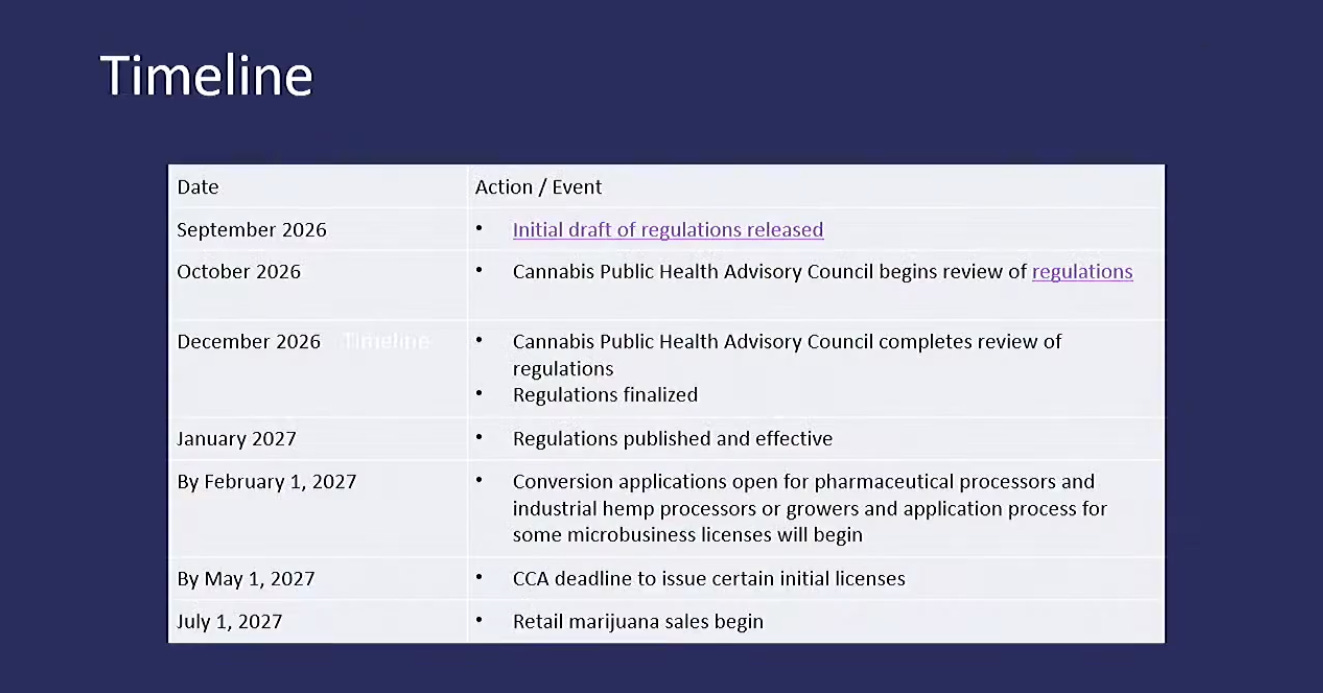
A timeline for implementing the retail market, posted on the Cannabis Control Authority’s website and reviewed by Shelton, calls for the state to begin receiving applications, including conversion and some microbusiness applications, by Feb. 1, 2027, which is why the zoning changes needed to come before the Planning Commission now rather than early next year. Retail marijuana sales are set to begin statewide July 1, 2027. (0:05:23)
Virginia’s retail marijuana market rolls out in phases through mid-2027
Draft regulations released in September will be finalized in December and take effect in January. Some applications open by Feb. 1, 2027; retail sales begin July 1, 2027.
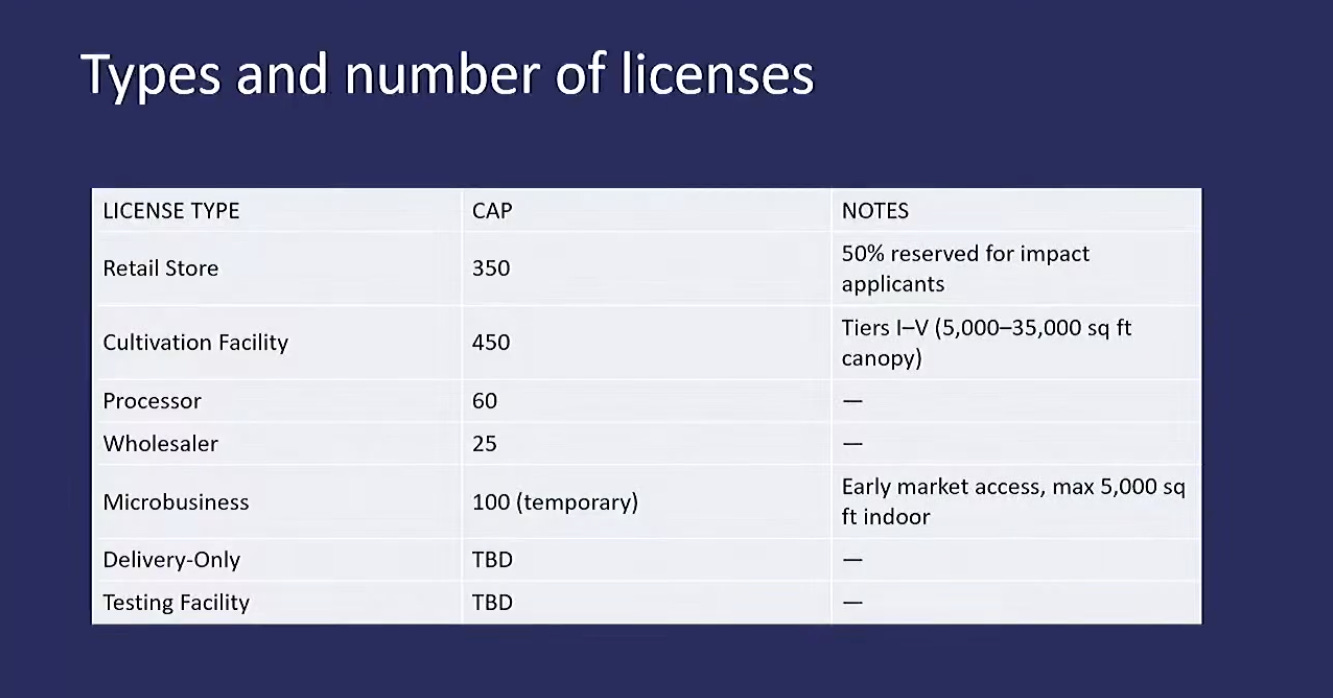
Marijuana establishments cover cultivation, processing, testing, transport, delivery and retail sales of marijuana, including microbusinesses that handle growing, processing and selling on a smaller scale, Shelton noted. Pharmaceutical processors and cannabis dispensing facilities can also be authorized to exercise dual-use privileges. The state plans to issue up to 350 retail licenses, half reserved for impact applicants, and 100 temporary microbusiness licenses to start, though those caps could change later. (0:06:06)
The Cannabis Control Authority’s operating regulations remain in draft form and are expected to be finalized next month, she said. The roughly 80 pages of draft rules cover permit requirements and fees, an objection and appeal process, sales limits, and facility, security and operating requirements. The regulations also address advertising limits, tracking and inventory rules, staffing and training requirements, and penalties for violations. (0:07:38)
Virginia plans to cap marijuana licenses across seven business types
Caps include 350 retail stores, half reserved for impact applicants, 450 cultivation facilities, 60 processors, 25 wholesalers and 100 temporary microbusiness licenses. Delivery and testing caps are undetermined.
State license requirements govern where marijuana retail stores and microbusinesses may locate. They cannot be within 1,000 feet of a hospital, school, institution of higher education or child day program, or located in a way that would adversely affect those institutions, Shelton explained. Businesses also cannot sell marijuana if they sell alcohol or tobacco, and must avoid interfering with residential property's peaceful enjoyment while meeting sanitation, health and building code requirements. (0:08:53)
Shelton said additional regulations prohibit the consumption of marijuana on site and bar businesses from operating out of a private residence. Retail sales establishments are limited to 2,500 square feet and microbusinesses to 5,000 square feet, with strict security requirements covering access, locks, vaults, cameras and age limits for anyone in the sales area. Physical signage also cannot be located closer than 500 feet from a school, daycare, playground or similar recreational or child-centered facility, or a substance use disorder treatment facility. (0:09:41)
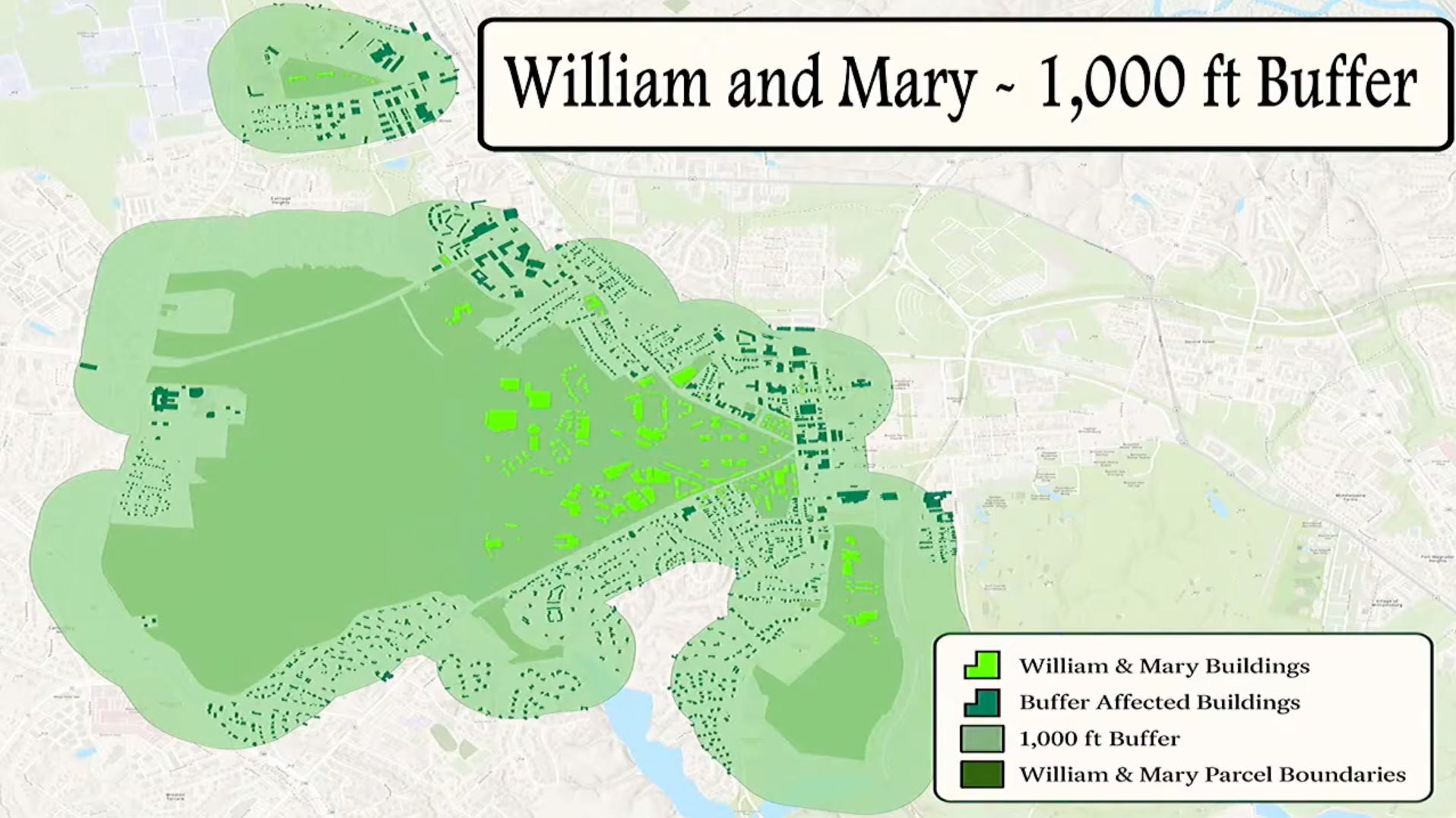
State law generally preempts local regulation of marijuana businesses but allows limited exceptions, including letting the city apply standard zoning, parking and signage rules, require a special use permit, and reduce the state's buffer distances without expanding them, Shelton said. A map shown to commissioners depicted the 1,000-foot buffer around William & Mary, where marijuana retail stores and microbusinesses could not locate unless the City Council decided to reduce it. (0:11:10)
Staff recommended that marijuana establishments be permitted in the city's B-2 and ED districts, covering Upper Richmond Road, Second Street and Quarterpath, outside the required buffers, including the one around the hospital. Shelton said staff also recommended requiring a special use permit so the City Council could weigh specific proposed sites, parking and other considerations. The proposed ordinance applies the standard special use permit review process, and staff did not propose any additional special use permit requirements for marijuana establishments at this time. (0:14:14)
The package headed to council also proposes retail hours of noon to 8 p.m. Those hours would be set under Chapter 10 of the city code, separate from the zoning ordinance. The package also includes a ban on consuming or offering marijuana in public parks, playgrounds, streets and sidewalks. State penalties take effect July 1, 2027. They include a $250 civil fine for a first offense and an added substance abuse treatment requirement for a second. Third and later offenses could be treated as Class 4 misdemeanors. (0:15:17)
Shelton explained state law allows the City Council to set a local marijuana sales tax of between 1% and 3.5%. Staff intends to recommend the maximum 3.5% rate, effective July 1, 2027. Retail marijuana businesses would also be subject to the city's existing BPOL tax at the retail rate of 20 cents per $100 of gross receipts. (0:16:01)
Commissioners raised a series of questions about the ordinance’s scope, including what products marijuana establishments could sell, how the required buffers would apply if a school later located near an existing business, and why the city’s light industrial district was excluded from the permitted zones. A member of the public spoke against allowing cannabis retail sales in the city. The commission then voted unanimously to approve the ordinance as written. (0:17:05)