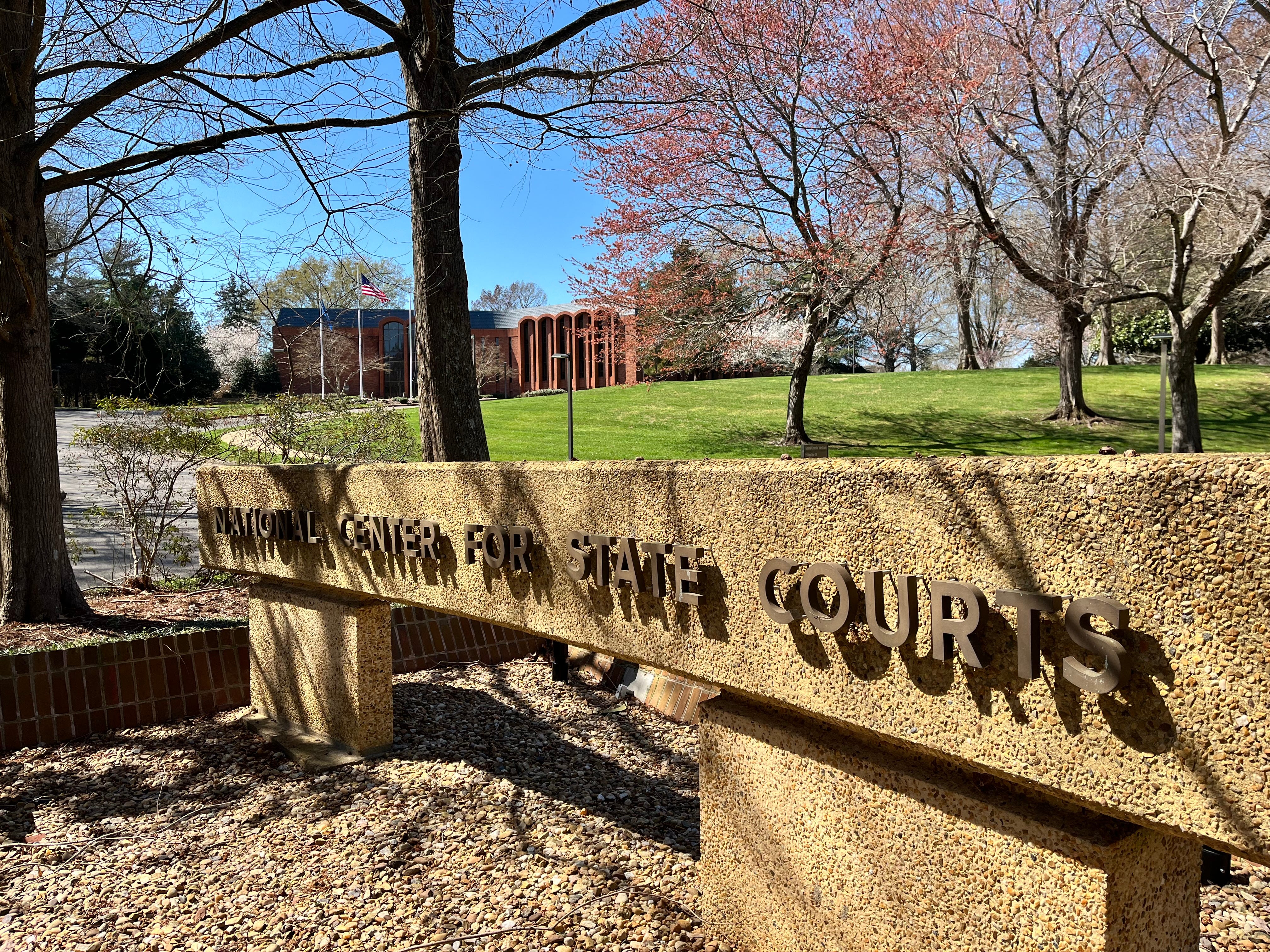
Williamsburg's NCSC tracks growing role of AI in justice system
Ongoing training by National Center for State Courts covers AI issues from evidence and law enforcement to self-representation

How should courts use and judge artificial intelligence without compromising constitutional rights? That question took center stage March 18, 2026, when the Williamsburg-based National Center for State Courts (NCSC) convened a webinar titled “AI in Criminal Cases: Courts’ Role in Preserving Constitutional Rights.” According to the NCSC, the session brought “together law enforcement, prosecutors, judges, and technology experts to examine how AI is being used in the criminal justice system and what guardrails are necessary to preserve Fourth Amendment rights, due process, and equal protection.” It also offered courts practical guidance on authenticating and evaluating the reliability of AI-generated evidence.
The stakes are high. A recent post on the NCSC website warns that AI-generated evidence poses a serious threat to public trust in the courts. The technology to fabricate photos, audio, video, and documents has never been more accessible, and courts are struggling to keep pace. According to the blog post, defensive technologies cannot yet reliably detect AI-generated content, putting courts in a difficult position of requiring forensic investigations for every disputed piece of evidence. This could slow the justice system and disadvantage those who cannot afford expert analysis.
Bad actors are also exploiting what researchers call the “deepfake defense,” dismissing authentic recordings as fabrications. In response, the NCSC has published bench cards to help judges evaluate both acknowledged and unacknowledged AI-generated materials. Overall, courts are beginning to act as well, with policymakers considering new rules that would subject machine-generated evidence to reliability standards similar to those applied to expert testimony.
The lateset AI-focused webinar is part of a broader effort by NCSC, one of Williamsburg’s biggest employers, which has advised courts for more than 50 years, to prepare state courts for the challenges and opportunities of artificial intelligence. The implications are massive, as NCSC notes that state courts handle 98% of U.S. cases, totaling 70 million filed cases in 2024.
The NCSC is led Elizabeth T. Clement, the organization’s President and CEO, who succeeded Mary McQueen last year. Clement, formerly chief justice of Michigan, is the second judge to serve as NCSC president. She discussed some of her views in an interview posted on the NCSC website. “We have to think about our justice system in a very different way than we’ve traditionally thought about it to make sure that everyone, without exception, has the same access to a justice system that is fair and assists them in resolving their legal issues,” she said.
Access to Justice
That concern for fairness extended beyond the criminal courtroom. Several sessions examined how AI is reshaping access to legal services, particularly for people navigating the courts without an attorney. A January 2026 webinar, “AI Tools, Self-Represented Litigants and the Future of Access to Justice,” captured the core tension: many people are already turning to general-purpose AI chatbots for legal guidance, often with little oversight. Building on that, the series also explored regulatory reform that could allow AI-powered tools to responsibly fill gaps in public legal services and help more people access the legal system on their own terms.
Equipping Legal Professionals
While access to justice sessions focused on the public, other webinars turned attention to the practitioners serving them. Those sessions examined how legal professionals and court staff can incorporate AI into daily work responsibly. A February 2026 webinar, “Navigating the AI Landscape: Best Practices for Legal Professionals,” addressed practical integration and risk management. To support that effort at an institutional level, NCSC also introduced an AI readiness guide for courts at varying levels of technological maturity and a role-specific literacy framework for judicial officers and court staff.
Broader Trends
Underlying all of these discussions are larger forces reshaping how courts operate. The series has also looked at generational workforce shifts and the digital divide, recognizing that AI does not arrive in a vacuum but as part of sweeping changes already underway.
The writer used AI tools and these sources:
AI in criminal cases: Courts’ role in preserving constitutional rights (March 18, 2026)
Data Dives: AI solutions for courts to address the digital divide (March 10, 2026)
Navigating the AI landscape: Best practices for legal professionals (February 18, 2026)
AI tools, self-represented litigants & the future of access to justice (January 21, 2026)
Modernizing unauthorized practice of law regulations to embrace AI-driven solutions & improve access to justice (December 17, 2025)
AI literacy for courts: A new framework for role-specific education (November 19, 2025)
Building AI readiness in state courts (September 17, 2025)
Exploring the effects of AI & generational shifts in the workforce (June 18, 2025)
American Bar Association “The Legal Industry Report 2025” - AI webpage
Other ways to support the Williamsburg Independent:
Buy me a coffee: ko-fi.com/williamsburgindependent
Tip on PayPal: paypal.com/ncp/payment/2L8DQJ62CWGRS
Go shopping: etsy.com/shop/dogstreetpress
Read a book: bookshop.org/shop/independentbookshop
Facebook: facebook.com/williamsburgindependent
Twitter: x.com/WburgIndie
YouTube: youtube.com/@WilliamsburgIndependent