Williamsburg Pursuing Banking Partnership to Spur Affordable Housing
Redeveloping Blayton and Triangle buildings “on the horizon” as city aims to transform downtown core

The Williamsburg Planning Commission received a presentation earlier this week from Williamsburg City Manager Andrew Trivette concerning the city’s 5-year Capital Improvement Plan (CIP). Among the items Trivette discussed was the city’s pursuit of a new banking partnership to spur affordable housing initiatives.
“I’m pretty excited to tell you that after many years of trying to find financial partners in the community to help us implement some of those recommendations, we now have a bank that is very interested. I’ve been working with them, along with the mayor, for probably four months to structure a series of programs that address many of the recommendations that were still on that list that we had not tackled,” Trivette told the Planning Commission, though he did not identify the bank in question.
The City Council will receive a presentation from the bank at a meeting next month, Trivette told commission members. The goal of the partnership is to implement long-standing recommendations from the city’s 2021 affordable housing study. Trivette noted that some of the program’s funding will also come from over $900,000 in COVID relief funds that the city earmarked for affordable housing, but has yet to spend.
The 2021 affordable housing study documented a substantial and projected increase in the need for affordable housing, with an estimated shortfall of 1,247 units in 2021 and projections rising to more than 1,600 units by 2040 without policy intervention. The report emphasized the use of existing buildings, city-owned land, zoning tools, and public-private partnerships as mechanisms to address housing demand, while also identifying additional strategies such as inclusionary zoning, accessory dwelling units, and community land trusts for future consideration.
A workgroup consisting of representatives from local government, industry and nonprofit interests reviewed more than 80 potential affordable housing initiatives and identified five priority recommendations intended to create or preserve housing units across a range of income levels. These included hotel-to-housing conversions, redevelopment of the Triangle and Blayton buildings, construction of workforce housing at Waller Mill, mixed-use and mixed-income development along Capitol Landing Road, and expanded rehabilitation grants to preserve existing housing stock.
“I think at the end of the day City Council will be pretty pleased … especially considering this is not a huge sum of money spread across so many programs,” Trivette said.
Potential redevelopment of Blayton & Triangle buildings
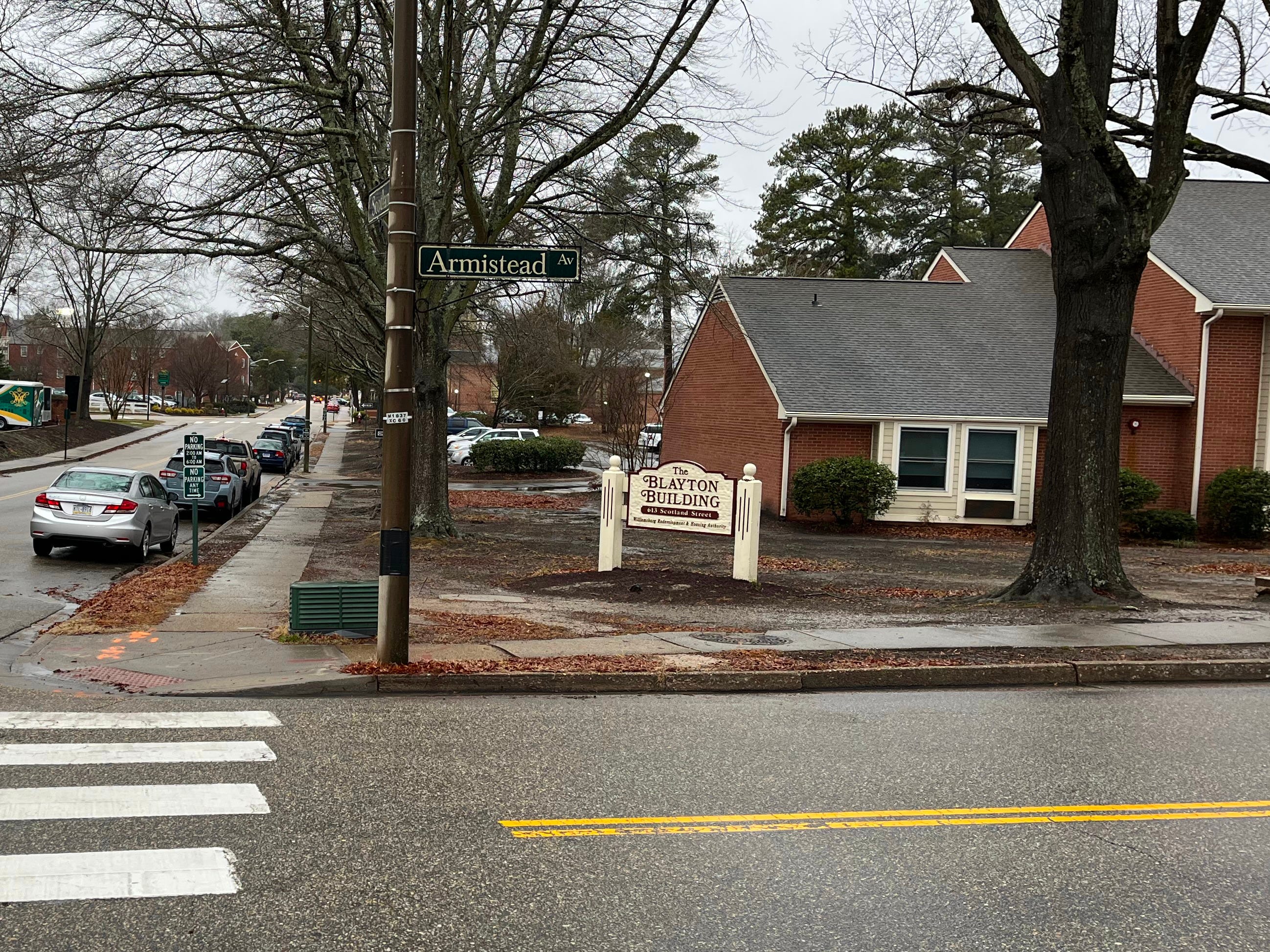
Though no additional information was provided at the meeting concerning the potential banking partnership, other aspects of affordable housing were discussed as well. The city plans to build a new downtown library and envisions still further overhauls of the city core. For example, Trivette spoke about the city’s desire to redevelop city owned land partially occupied by public housing for elderly and disabled city residents. According to the city’s affordable housing study from 2021, the local Public Housing Authority supports constructing new housing on the property due to the age and limitations of the current building.
For its part, the city sees the land as an untapped opportunity. “You know that space has a lot of value. The building itself doesn’t use it efficiently, and so is there an opportunity for us to partner with somebody to accomplish a lot of goals at the same time,” remarked Trivette.
Across the street, the city also envisions demolishing the current Triangle building in favor of something new. Altogether, the 2021 study says that the changes will result in “commercial first floors with varied income residential above. In conjunction with the existing senior housing at Blayton, this plan is an exciting opportunity for an improved downtown.”
The city has no active plans to move forward with those redevelopment plans, but the project remains a priority, according to Trivette. “As we move through the library project and get that underway, we’ll then turn our attention to the next major effort, which would be the Blayton Building redevelopment,” he said.
Writing a new Comprehensive Plan
Williamsburg is in the early stages of a multi-year update to its Comprehensive Plan, a process that will shape future decisions on land use, housing, transportation, and economic development. The city has budgeted $600,000 over two years to hire consultants and intends to pursue an incremental approach, allowing City Council to consider zoning changes before the final plan is adopted. City leaders argue that this is necessary to respond to rising housing demand, changing economic conditions, and evolving state land-use laws, rather than relying on policies adopted in 2021. Key focus areas include housing density and affordability, downtown redevelopment, infrastructure, and implementation strategies.
Proposals discussed in prior planning efforts envision higher-density housing, new building types, and public-private partnerships that could integrate residential, retail, and community uses. Together with expanded tools such as accessory dwelling units and small housing types, these strategies are intended to support affordability while reshaping the city’s core as part of a broader long-term planning effort.
Resident opposition to development in Williamsburg includes concerns about neighborhood integrity, fiscal responsibility, downtown density, environmental impacts, and transparency in governance. Homeowners have strongly resisted the spread of high-occupancy student rentals into residential areas, citing declining quality of life, safety hazards, and pressure created by William & Mary’s housing policies. Many residents also argue that the city is pursuing costly projects—such as a new library, splash park, and tax increases—without adequately distinguishing between essential needs and discretionary spending, particularly given economic uncertainty. Additional objections focus on a perceived lack of transparency in how decisions are made, including insufficient public notice and reliance on flawed data.
The writer used AI tools and these sources:
The Williamsburg Independent doesn’t run ads or pursue sponsors. But we do sell logo t-shirts and run an online bookshop …


The focus on mixed-income redevelopment around existing assets like Blayton is smart. Banking partnerships can unlock capital that municipalities cant access alone, but the real test is whether the timeline matches the projected 1,600 unit shortfall by 2040. I've sen similar efforts stall when partners underestimate the regulatory hurdles in converting public housing. The key will be keeping that $900K COVID fund velocity high while the bank structures deals.