William & Mary Board of Visitors' 2025 in Review
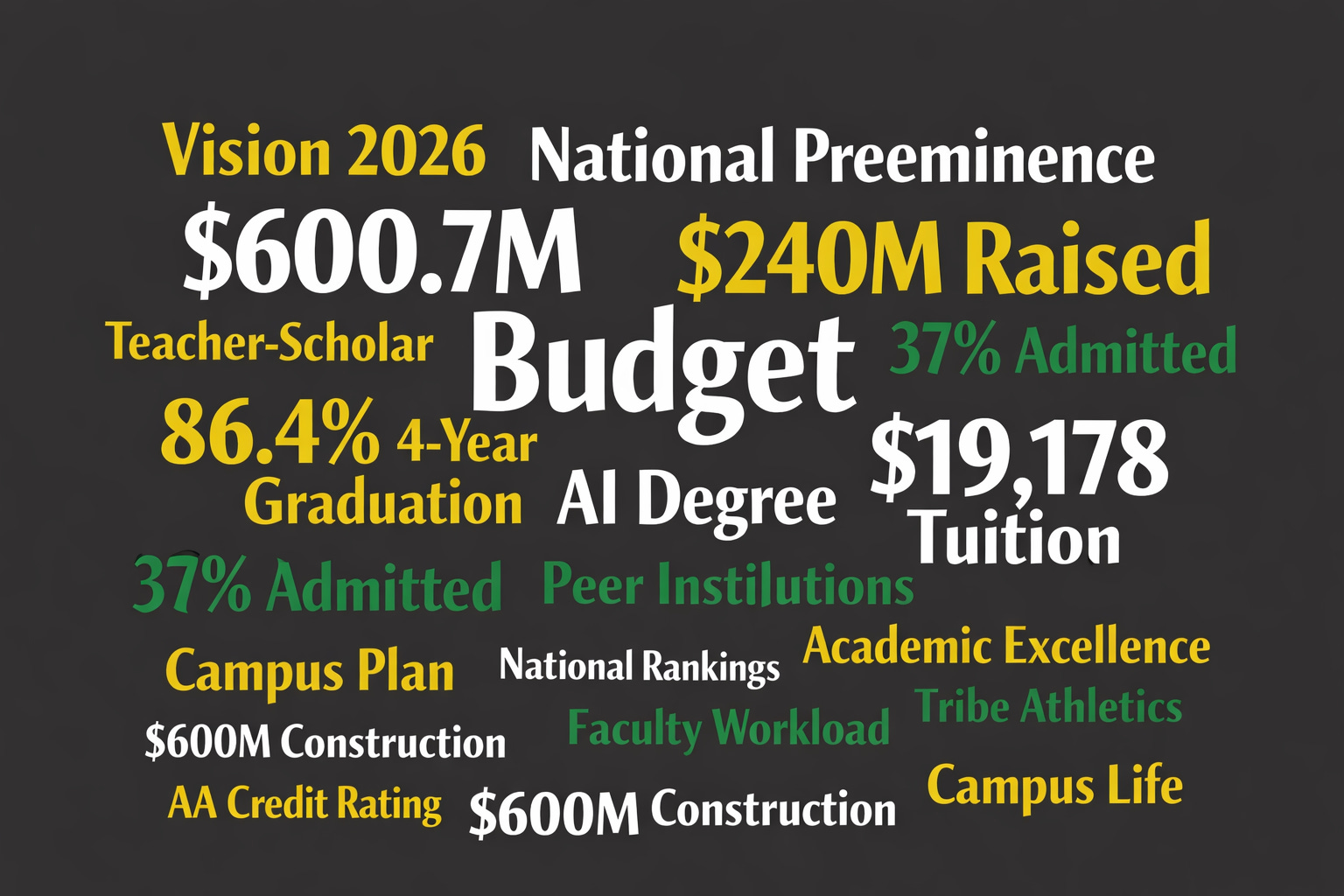
$600.7M operating budget, historic $240M in gifts, in-state tuition over $19K

The William & Mary Board of Visitors focused on maintaining the university’s long-term academic and financial goals while overseeing admissions, graduation outcomes, capital projects, and tuition and fees. Below is an overview of the issues they covered regarding the university’s operations, investments and priorities during 2025.
Student body
Admissions and student success metrics remained strong. The Class of 2029 recorded a 37% admit rate from 16,897 applicants. Reported outcomes included a 91% student success rate, a 12:1 student-to-faculty ratio, and an 86.4% four-year graduation rate for the Class of 2025. The university also reached 19% in-state Pell-eligible enrollment, meeting its 2026 access goal two years ahead of schedule.
Budget review
For the FY 2025–2026 cycle, the Board approved an operating budget of $600.7 million in revenue and $595.4 million in expenditures, representing a 3.0% increase in revenue over the prior year. As of June 30, 2025, the university’s total net position increased by 8.3% ($92.8 million) to $1.2 billion. Long-term debt totaled $374.3 million, supported by an AA issuer credit rating from Standard & Poor’s. The records also reaffirm William & Mary’s reliance on tuition and fees, which account for 60% or more of total revenue.
Capital improvements
The records also detail continued investment in capital projects and infrastructure. William & Mary is managing more than $600 million in active construction, including $10 million over five years for a Classroom Revitalization Program and $20 million for the Sunken Garden Geothermal Field serving seven buildings. At the Virginia Institute of Marine Science, the approved 2026–2032 Six-Year Capital Plan totals $129.4 million, highlighted by a $60.2 million Fisheries Science Building.
Tuition and fees
Tuition and mandatory fees for the 2025–2026 academic year were finalized during the reporting period. In-state undergraduate tuition was set at $19,178, reflecting a 2.5% increase, while out-of-state tuition increased 3.3% to $44,876. Mandatory fees totaled $7,278 for in-state students and $7,849 for out-of-state students. The Student Technology Fee was reduced by $30, following the allocation of state modernization funding.
Institutional gifts
Philanthropy played a significant role in the university’s financial profile. Fiscal year 2025 marked the strongest fundraising year in William & Mary’s history, with more than $240 million raised. Major gifts included $100 million from Jane Batten and $50 million from Dr. R. Todd Stravitz to support the Batten School of Coastal & Marine Sciences, as well as a $15 million gift from Rob and Jean Estes to establish an Accounting Center. The Senior Class Gift also reflected high engagement, with 84% participation from the Class of 2025.
Athletics
Campus life and athletics outcomes were also reported. Athletics operating revenues reached $38.2 million, generating a $749,998 surplus, while the athletics-dedicated endowment grew to $151.4 million. Student-athletes maintained a 3.25 or higher cumulative GPA for the seventh consecutive semester. Engagement indicators included a 50% increase in wm.edu web traffic and a 200% increase in social media engagement following the Women’s Basketball NCAA Tournament victory. Recreational participation remained high, with 82% of students engaged in campus recreation and 102,243 turnstile entries recorded at the Bee McLeod Recreation Center during Fall 2024.
Board of Visitors Meetings, February 5-7, 2025
The William & Mary (W&M) Board of Visitors convened from February 5-7, 2025, to conduct regular business and advance the university’s strategic goals as it entered its 332nd year. The meetings took place in Blow Memorial Hall and the Sadler Center, focusing on the university’s push toward national preeminence.
November 2024 Recap: Groundwork for Strategic Planning
The Board began by reviewing the groundwork for strategic planning established during the November 2024 session. This groundwork identified national preeminence through four dimensions: student demand, research and innovation, academic excellence, and student outcomes. A central theme was balancing “Me, Here, Now” (tangible, immediate outcomes) with “Us, Everywhere, Forever” (long-term institutional mission and stability). Across committees, members identified the need to enroll students from all 50 states and improve brand awareness with business leaders and legislators.
Presentation: Joint Board Meeting
On February 6, the Board of Visitors met jointly with the W&M Foundation Board, Alumni Association Board, and Annual Giving Board. President Katherine Rowe facilitated a SWOT analysis to identify institutional strengths, such as global academic rigor, and future threats, such as the evolving rankings landscape. A major highlight was the update on the Batten School of Coastal & Marine Sciences, established by a $100 million gift from Jane Batten. President Rowe also announced a $50 million gift from Dr. Todd Stravitz to create a scholar program providing free tuition for all undergraduate marine science students.
W&M Staff Liaison Report
Staff Liaison Candice Vinson reported that the Development Support Fund (DSF) has been highly successful, awarding over $35,000 to 35 employees since the start of the academic year. The staff remains focused on completing the distribution of the full $50,000 fund by April. Additionally, the report highlighted the momentum of the Fall Food Drive, which collected 1,465 pounds of food, and outlined plans for a new Spring Food Drive to support the Campus Food Exchange. Staff members are also actively engaging with the Workday implementation team to ensure a smooth transition to the new business platform.
Report of the W&M Student Representative
Student Representative Terra Sloane updated the Board on activities designed to enhance the student experience, including the Green & Gold Bash and the “Road to Richmond” advocacy event. She noted that the Student Assembly is prioritizing transparency by creating videos to explain their connection to the Board of Visitors. A major infrastructure priority for students is the improvement of pedestrian safety, with the assembly overseeing the repainting of 27 crosswalks and the installation of a new flashing beacon on Jamestown Road.
Faculty Representative Report to the Board of Visitors
Dr. Scott Swan’s report emphasized the teacher-scholar model, where research and instruction are mutually reinforcing. He shared an example of interdisciplinary research involving students collecting data in riparian communities in Nepal to understand the trade-offs between economic development and conservation. However, Dr. Swan also noted faculty concerns regarding dependent tuition benefits and the stress of balancing service loads with research requirements during a period of rapid change.
Capital Outlay Project Progress Report
The university reported on over $600 million in active construction projects. The Integrated Science Center Phase 4 (ISC4) remains on schedule for a September 2025 completion, while the Martha Wren Briggs Center for the Visual Arts was dedicated during Charter Day weekend. Monroe Hall renovations were completed in August 2024, now utilizing 27 geothermal wells. Construction continues on the Mackesy Sports Performance Center and the renovation of Old Dominion Hall, though the latter faced unforeseen structural deficiencies that are being managed within the existing budget.
Committee on Audit, Risk & Compliance
Supporting the Workday ERP implementation remains the Internal Audit office’s top priority, with staff members embedded in testing teams to monitor over 2,000 business process scenarios. The committee also received a spotlight on hazing prevention, noting that W&M has delivered in-person training to nearly 5,000 students since 2022 under the requirements of Adam’s Law. The university is also monitoring the regulatory landscape following recent federal executive orders regarding affirmative action.
W&M Financial Model (Financial Affairs Committee)
The committee discussed W&M’s status as a tuition-dependent institution, where 60% or more of revenue is derived from tuition and fees. While W&M has a competitive advantage in in-state aid, meeting full demonstrated need for Virginians, it faces challenges in providing competitive aid for out-of-state (OOS) students compared to peers like UVA. The university currently leads national universities in efficiency, maintaining high rankings despite having significantly fewer financial resources than Ivy League competitors.
Provost’s Report (Committee on Academic Affairs)
Provost Peggy Agouris shared results from a survey of 1,100 students who defined academic excellence through high academic standards, distinguished faculty, and research opportunities. The committee approved renaming the Department of Kinesiology to the Department of Health Sciences to better reflect the evolution of its curriculum into public health and human physiology. Additionally, updates were provided on the faculty retirement incentive plan, which aims to have 30 faculty members retire over two years to allow for strategic reinvestment in growing fields.
W&M Org Structure: Succession Planning & Talent Development
Discussions on organizational structure revealed a philosophy centered on “Customer Intimacy,” focusing on deep, long-term relationships through personalized services rather than being the “lowest cost” provider. To evolve, W&M is implementing “Evolutionary Tenets” such as leaning into technology, upskilling the workforce, and employing fewer people while paying them better. The university has also launched the Leader’s Labs and a leadership development series to assist supervisors with management skills and knowledge transfer.
W&M Director of Athletics Update
Director Brian Mann reported that student-athletes achieved a 3.25 cumulative GPA for the sixth consecutive semester. He updated the Board on the House v. NCAA case, noting that its resolution will fundamentally reshape the landscape of college athlete compensation. Basketball attendance has surged, with a packed student section at Kaplan Arena creating an electric atmosphere that supports the university’s brand.
Campus Recreation Stats and Updates
Campus Recreation reported that 82% of students participate in its programming. W&M boasts the largest sport club program in Virginia, with 49 active clubs and over 1,900 participants. The Bee McLeod Recreation Center saw 102,243 successful turnstile entries during the Fall 2024 semester, and more than 65 free weekly fitness classes are offered to the campus community.
Board of Visitors Meetings, April 23-25, 2025
The William & Mary (W&M) Board of Visitors convened for its meetings from April 23-25, 2025, at Blow Memorial Hall to authorize the university’s financial roadmap, advance capital project plans, and finalize significant organizational changes. The sessions took place as the university moved into the final phase of its Vision 2026 strategic plan while preparing for a period of transition in governance for Richard Bland College.
Presentation: Joint Board Meeting
The Board reviewed a recap of the Joint Board Meeting held in February, which included the W&M Foundation, Alumni Association, and Annual Giving boards. During this session, leadership conducted a SWOT analysis to identify institutional strengths such as global academic rigor and threats like the evolving rankings landscape. A primary highlight was the formal announcement of a $50 million gift from Dr. R. Todd Stravitz and the Brunckhorst Foundations to the Batten School of Coastal & Marine Sciences. This gift, the largest for scholarships in university history, establishes a program providing free tuition for all undergraduate marine science students in perpetuity.
W&M Staff Liaison Report
Staff Liaison Candice Vinson reported that the Development Support Fund (DSF) has been a significant success, awarding over $48,000 to 44 employees this academic year to support professional growth. The leadership anticipates the full distribution of the $50,000 fund by the end of April. While noting staff engagement with the Workday implementation, Vinson shared concerns regarding a hiring slowdown that has left non-critical positions vacant for extended periods, contributing to staff burnout. The report concluded with a request to install plaques in Blow Hall to honor the leadership of the Staff Assembly and Professional and Professional Faculty Assembly (PPFA) presidents.
Report of the Student Representative and Testimonials
Student Representative Terra Sloane delivered her final report, highlighting the passage of the “You Belong Resolution” to reinforce the university’s commitment to inclusive initiatives. She also reported on the “Student Assembly Against Sexual Violence” resolution aimed at improving campus resources. Sloane noted that March elections saw record-breaking engagement with 2,723 voters, electing Zoe Wang and Matt Swenson as the new student body leaders. Accompanying student testimonials for the strategic planning session emphasized the value of the St Andrews Joint Degree Programme and called for increased geographic diversity to bring varied perspectives to the campus community.
Faculty Representative Report to the Board of Visitors
Dr. Scott Swan reaffirmed the faculty’s commitment to the teacher-scholar model, emphasizing the integration of research and student mentorship. However, he reported that many faculty members are “tired” due to the rapid pace of institutional change and the disruptive role of Artificial Intelligence in the classroom. Widespread dissatisfaction was noted regarding dependent tuition benefits, and Dr. Swan highlighted that service requirements often crowd out time for research. Despite these challenges, faculty remains satisfied with the quality of students W&M attracts.
FY 2025-2026 Operating Budget Proposal
The Board approved Resolution 21, the FY 2025-2026 Operating Budget Proposal, which projects $600.7 million in revenue and $595.4 million in expenditures. This budget is designed to be balanced within the Educational and General (E&G) program without drawing from institutional reserves. Total revenue represents a 3.0% increase over the previous year. The spending plan prioritizes career services, student health and wellness, and the Workday ERP transition.
Undergraduate Tuition and Fee Increases
The Board finalized tuition and fees for the upcoming academic year, adhering to the rates approved in 2024. For William & Mary, the rates include:
In-state undergraduate tuition: $19,178, representing a 2.5% increase.
Out-of-state general undergraduate tuition: $44,876, representing a 3.3% increase.
Mandatory fees: $7,278 for in-state and $7,849 for out-of-state students.
Student Technology Fee: Reduced by $30 due to Commonwealth funding received for business modernization.
School of Law tuition: Increased by 2.5% for in-state and 5.0% for out-of-state students.
Richard Bland College Tuition and Fees
The Board approved Resolution 1, setting the FY 2025-2026 Tuition and Fees for Richard Bland College (RBC). Rates include:
In-state tuition: $214 per credit hour, a 2.5% increase.
Out-of-state tuition: $425 per credit hour, a 5.0% increase.
Total in-state tuition and mandatory E&G fees: $231 per credit hour. This was the final budget approved for RBC by the W&M Board before the college transitioned to an independent governing board on July 1, 2025.
Major Capital Plan and Project Progress Report
The Board approved Resolution 18, the Major Capital Plan 2025-2026, covering over $600 million in active projects. The progress report indicated that Integrated Science Center Phase 4 (ISC4) is on schedule for a September 2025 completion. Monroe Hall renovations were completed in August 2024, utilizing 27 geothermal wells. Old Dominion Hall renovations are ongoing but faced significant unforeseen structural deficiencies in the central lobby that are being managed within the existing budget. Preservation of the Sir Christopher Wren Building fully mobilized in February 2025 with the goal of completion before the 2026 national 250th anniversary.
VIMS Operating Budget and Capital Plan
The Board approved Resolution 22, the VIMS FY 2025-2026 Operating Budget Proposal of $70.7 million. Additionally, Resolution 19 was passed, authorizing the VIMS 2026-2032 Six-Year Capital Plan totaling $129.4 million. The top capital priorities for the Virginia Institute of Marine Science include the Marine Operations Administration Complex ($18.1 million) and a New Fisheries Science Building ($60.2 million) to replace flood-prone facilities.
SACSCOC Accreditation and Reaffirmation
Assistant Provost Matt Smith updated the Board on the SACSCOC reaccreditation process, reporting significant progress over the last year. A central requirement is the Quality Enhancement Plan (QEP) titled “Applied Learning for All”. This five-year initiative aims to ensure 100% of undergraduate students have access to hand-on, mentored experiences such as internships, research, study abroad, and civic leadership.
Sports: Football, Basketball, and Media Impact
The Board formalized two major athletic resolutions. Resolution HC-2 directed the move of W&M Football to the Patriot League as an associate member starting in 2026 to align with academically comparable institutions. Resolution HC-1 recognized the Women’s Basketball team for their first-ever NCAA Tournament appearance and victory. These successes led to a 50% increase in web traffic to wm.edu and a 200% increase in social media engagement.
Administration, Buildings and Grounds
The committee reported operational efficiencies, including an AI pilot in accounts payable projected to save 1,550 hours of processing time. Work is also underway on AI-powered chatbots to improve customer service on university web tools. The university implemented a streamlined hiring review process to manage costs during the ongoing hiring slowdown.
Renaming of Arts and Sciences
The Board approved Resolution 10 to rename the Faculty of Arts and Sciences as the College of Arts and Sciences. Dean Suzanne Raitt stated that the term “College” more accurately reflects the unit’s mission and its foundational status relative to professional schools. This change aligns the unit’s name with the university’s Royal Charter.
Institutional Advancement and Strategic Strategy
The committee reported that FY25 was the strongest fundraising year to date, highlighted by a $15 million gift from Rob and Jean Estes to establish an Accounting Center at the Mason School of Business. President Rowe presented the Rankings, Reputation & Strategy framework, identifying a macro trend called “Me, Here, Now,” where students prioritize immediate ROI and career readiness. The university will respond by pulling strategic levers in peer assessment and student success to maintain national preeminence.
Board of Visitors Retreat, July 22-24, 2025
The William & Mary Board of Visitors held its annual summer retreat from July 22–24, 2025, at the William & Mary Washington Center in Washington, D.C.. The three-day session served to onboard new members, establish leadership goals for the 2026 fiscal year, and advance long-term planning for the university’s physical and strategic future.
Orientation for Newly Appointed Members
The retreat began on July 22 with a formal orientation session titled “All Your Questions Answered” for the newest members of the Board: Melissa Ballenger, Eric Cantor, and Hillary Waldron. President Katherine Rowe provided these members with an overview of university operations and addressed questions regarding the upcoming academic year. Following a brief recess, the new members received a technology overview and a guided tour of the OnBoard platform, led by Deputy Clerk Dane Pascoe. The day concluded with a dinner at Rasika attended by university leadership and the new appointees to foster personal connections before the commencement of full Board business.
President’s FY26 Goals and the Peter Atwater Confidence Map
On July 23, President Rowe presented her goals for the 2026 fiscal year, using the “Peter Atwater Confidence Map” to frame her leadership priorities. She emphasized that for the next two years, the administration’s focus will be on stability, predictability, and the successful execution of existing high-impact initiatives rather than starting new major projects. President Rowe identified the current environment as a moment of intense uncertainty, labeling the level of enterprise risk as high due to factors outside the university’s control that could negatively impact finances and staffing. Her primary objectives include seeing the university through external challenges while ensuring financial and operational excellence, completing the Workday ERP implementation, launching two new schools, and pursuing decennial reaccreditation. Additionally, she intends to lay the groundwork for the next strategic plan by sharpening specific problem statements with the Board.
FY’26 Committee Overviews
Following the President’s report, the Board conducted committee breakout sessions facilitated by various chairs and university staff. These sessions provided a fiduciary orientation and a review of specific responsibilities for the 2026 fiscal year. The sessions were organized in a specific order, beginning with Academic Affairs and Administration, Buildings, and Grounds, followed by Athletics and The Student Experience. The breakouts concluded with Audit, Risk, and Compliance; Institutional Advancement; and Financial Affairs. These small-group discussions allowed members to align on the “rhythm of work” required for their respective charges.
Campus Comprehensive Plan
During a working lunch on July 23, the Board received a presentation on the draft 2025 Campus Comprehensive Plan, led by Chief Business Officer Sean Hughes and Dr. Taylor Brings. This plan provides a methodology for directing change in the physical environment to ensure campus development reinforces the university’s mission. It is structured as a framework rather than a static document, allowing for incremental building toward a vision that extends to the year 2100. Key components include a 10-year Learning Spaces Plan to modernize classrooms and a 100-year Landscape Plan to preserve the ecological character of the campus. The plan identifies several focus areas for redevelopment, including the Boswell Hall site, which could accommodate a new academic facility and a parking garage with up to 355 spaces. Other priorities include creating a mixed-use district at the Campus Center and redeveloping the Green & Gold Village.
Amend Campus Capital Plan
The Board approved Resolution 4 to amend the university’s Major Capital Plan for 2025–2026. These amendments reflect evolving institutional needs and include the addition of new projects and changes to project timing or funding sources. Among the short-range priorities (0-3 years) added to the plan is the renovation and expansion of Plumeri House, funded by a $5 million philanthropic gift to enhance hospitality and outreach. Other critical projects in the amended plan include the Classroom Revitalization Program, a $10 million effort over five years to modernize core mission spaces, and the Sunken Garden Geothermal Field, a $20 million project aimed at creating significant operational efficiencies for seven surrounding buildings.
Institutional Strategy and National Preeminence
President Rowe and Secretary Kendrick Ashton led a session on Institutional Strategy, recapping a year of internal work to define national preeminence. The Board agreed that preeminence demands excellence across four pillars: student demand, research and innovation, academic excellence, and student outcomes. The session included an overview of work performed by Huron, which began a comprehensive institutional analysis in January 2025 to identify competitive strengths. Moving forward, the university will engage the campus community through “Tiger Teams” organized around specific “How might we?” problem statements. These statements will address creating demand among talented global students, preparing graduates for an AI-engaged economy, and claiming a lead role in high-impact research areas.
Emerging Topics: Principles and Decision-Trees
On July 24, the retreat’s final day, leadership discussed emerging issues in governance communications. This session explored “Decision-Trees” and principles for determining when the university should speak publicly on social or political issues. President Rowe emphasized that William & Mary speaks with its own voice in politically neutral ways to maximize the space for engagement. The strategy focuses on being “second-day responders” who speak proactively and affirmatively rather than defensively.
Acquisition of Property: Mataoka Dam
The Board approved Resolution 2 regarding a land acquisition necessary for the critical rehabilitation of the Lake Matoaka Dam. The project ensures the structure can safely withstand extreme precipitation events and comply with state safety regulations. To facilitate appropriate access and control, the university approved a boundary line adjustment with the property at 950 Jamestown Road. This transaction results in the university acquiring a parcel of approximately 4,500 square feet in exchange for $64,985.
Historic Campus Updates
The retreat concluded with a session on the Historic Campus, specifically the future of the 1732 President’s House. The Board approved Resolution HC-1, which directs a preservation effort to transform the structure’s first floor into event space to serve as the “living room of the university”. A comprehensive study by Glavé & Holmes Architecture determined that while it is feasible to arrest the building’s degradation, continuing its use as a private residence would be the costliest option due to modern standard requirements. Consequently, the Board directed the administration to explore alternative locations on campus for a presidential residence while retaining the name “President’s House” for the historic building regardless of its future use.
Board of Visitors Meetings, September 24-26, 2025
The William & Mary (W&M) Board of Visitors convened from September 24-26, 2025, for its first regular meeting of the 333rd academic year. The sessions, held in Blow Memorial Hall, focused on adopting a long-range physical framework for the campus, finalizing institutional peer benchmarks, and approving the university’s strategic roadmap through 2032.
William & Mary Six-Year Plan
The Board approved Resolution 11, the 2026-2032 Six-Year Plan, which serves as the university’s strategic and financial roadmap required by the Commonwealth. The plan is anchored by the four pillars of Vision 2026: Data, Careers, Water, and Democracy. Key priorities include growing the Pell-eligible population, investing in the new School of Computing, Data Sciences & Physics, and expanding applied learning opportunities. Financially, the plan assumes conservative tuition increases of 2.5% for in-state students and 3.0% for out-of-state students for the 2026-2028 biennium. A primary fiscal challenge identified was the 851% increase in the cost of Virginia Military Survivors & Dependents Education Program (VMSDEP) waivers since inception, for which W&M is requesting $7.42 million in state support for FY27.
Staff Liaison Report
Staff Liaison Adam White, President of the Professional and Professional Faculty Assembly, reported that the assemblies are focusing on enhancing the employee experience through low-cost initiatives mindful of budgetary constraints. A primary effort involves collaborating with the new Chief Human Resources Officer to streamline onboarding and employee classification systems. The report highlighted the success of the Development Support Fund (DSF), which received 23 applications for over $19,000 this fall. Additionally, the joint assembly Fall Food Drive is underway to support the Campus Food Exchange. White expressed concern that the needs for services following university expansion may be outpacing available funding.
Report of the W&M Student Representative
Student Representative Zoe Wang shared a snapshot of the student experience, emphasizing a “people-centered and results-driven” administration. She reported student frustration regarding construction delays in the West Woods complex, which displaced approximately 900 students. Specifically, students housing at the Woodlands Hotel face transportation challenges, prompting the Student Assembly to advocate for extended shuttle hours. Wang also detailed the assembly’s research into finals week schedules, noting that W&M is above the median for time allotted per exam among peers. Other priorities include advocating for a Busch Gardens Day revival in 2026 and supporting state legislation for free menstrual products.
Faculty Representative Report to the Board of Visitors
Dr. Scott Swan reaffirmed the faculty’s commitment to the teacher-scholar model, where research and instruction are mutually reinforcing. However, he noted that the faculty is exhausted due to the rapid pace of institutional change and the service loads required to support a “students first” culture. He raised concerns about “terminal associate professors” who may lack financial incentives to pursue full professorship because the resulting service requirements often outweigh incremental pay increases. Faculty interest is currently focused on the plans of the new Vice Provost for Research, Alyson Wilson, and the long-term strategy following the conclusion of Vision 2026.
Committee on Financial Affairs, Compensation, and Peer Groups
The Committee on Financial Affairs reviewed W&M’s tuition-dependent financial model, where 60% or more of revenue is derived from tuition and fees. A major action item was the adoption of the 2025 W&M Official Peer Institutions List (Resolution 1-R), which includes 24 institutions such as Brown, Duke, UVA, and Vanderbilt. This updated list provides a framework for benchmarking academic quality and financial strength. In a closed session, the Board approved a 6% base salary increase for President Rowe, effective July 1, 2025, and a one-time incentive payment of 25% of her FY2025 base salary. Total projected FY26 revenue for the university is $600.7 million.
Administration, Buildings and Grounds and Capital Projects
The Board adopted the 2025 Campus Comprehensive Plan (Resolution 9), establishing a vision for the physical environment through the year 2100. The plan includes a 10-year Learning Spaces Plan to modernize classrooms and a 100-year Landscape Plan. In the Capital Outlay Progress Report, classes are set to begin in the Integrated Science Center Phase 4 (ISC4) in January 2026 following its substantial completion in September 2025. The Board approved Resolution 4, which amended the Major Capital Plan for 2025-2026 to include a $10 million Classroom Revitalization Program over five years.
Provost’s Report, KPIs, and Student Experience
Provost Peggy Agouris and the Academic Affairs Committee reviewed Key Performance Indicators (KPIs), noting a linear 91% student success rate and a 12:1 student-to-faculty ratio. The Class of 2029 admission profile showed W&M remains highly selective, with a 37% admit rate for a pool of 16,897 applicants. The incoming class includes 19% in-state Pell recipients, meeting the university’s 2026 goal two years early. Regarding the Class of 2025, the university reported an 86.4% four-year graduation rate, a 12% increase in degrees conferred compared to 2024. The Committee on the Student Experience introduced two new senior leaders: Cliff Everton (AVP for Public Safety) and Dr. Chris Renjilian (AVP for Health & Wellness).
Institutional Advancement
The committee reported that FY25 was the strongest fundraising year in W&M’s 332-year history, raising more than $240 million. Highlights include a $15 million gift from Rob and Jean Estes to establish an Accounting Center at the Mason School of Business. Additionally, 84% of the Class of 2025 contributed to the Senior Class Gift. The committee continues to work with consultants to define W&M’s approach to national preeminence, utilizing four pillars: student demand, research and innovation, academic excellence, and student outcomes.
W&M Athletics Committee Update
In its inaugural session, the Athletics Committee discussed the role of sports in pursuing national preeminence. The committee noted that successful programs, such as the Women’s Basketball NCAA run, acted as a catalyst for visibility, resulting in a 50% increase in web traffic to the university’s site. Key upcoming milestones include the move of W&M Football to the Patriot League in 2026, which aligns the program with academically comparable institutions. Student-athletes maintained a 3.25+ cumulative GPA for the seventh consecutive semester.
Public Safety Update
Associate Vice President Cliff Everton provided an update on public safety risk, citing challenges such as hoax threats, political discourse, and pedestrian safety. Proactive mitigation efforts include the use of the Rave Guardian App, now available to all students, staff, and Board members. Chief Don Butler shared results of a 90-day police assessment aimed at increasing staffing, updating equipment, and creating a part-time watch center for improved campus monitoring. Chief Butler also noted that mass notification alarms and prepared emergency messages are ready for immediate deployment in the event of a threat.
Board of Visitors Meetings, September 24-26, 2025
The William & Mary (W&M) Board of Visitors met from November 19-21, 2025, in Blow Memorial Hall to conduct the regular business of the university. This session was marked by a unique “Academic Affairs Day,” a plenary session where the Board focused its full attention on the academic mission of the institution through extensive reports from all six academic deans.
Financial Reports, Debt Management, and Internal Audit
The Committee on Financial Affairs reviewed the Unaudited Consolidated Financial Report for the year ended June 30, 2025, which showed an overall growth in net position of $92.8 million (8.3%), bringing the total net position to $1.2 billion. Total assets increased by $95.0 million, driven largely by ongoing capital construction and market-driven investment performance. The 2025 Debt Management Report confirmed that as of June 30, 2025, the university’s total outstanding long-term debt was $374.3 million. The university’s “AA” issuer credit rating was recently reaffirmed by Standard and Poor’s, which cited robust retention, graduation rates, and healthy cash reserves as key strengths.
The Committee on Audit, Risk, and Compliance, led by new University Auditor Christopher Crawford, presented the 2026 Internal Audit Work Plan (Resolution 6), which was approved by the Board. The plan includes upcoming audits for the School of Computing, Data Science, and Physics, as well as payroll, graduate admissions, and Workday student readiness. Additionally, the Board approved Resolution 4 to amend the Major Capital Plan for 2025-2026. This amendment included the $10 million Classroom Revitalization Program to be spent over five years, the renovation of Plumeri House supported by a $5 million gift, and a $1.15 million donor-funded golf suite in Kaplan Arena.
Staff, Student, and Faculty Reports
Staff Liaison Adam White reported that the employee assemblies are working with the new Chief Human Resources Officer to streamline onboarding and employee classification systems. He also highlighted the success of the joint assembly Fall Food Drive to support the Campus Food Exchange. Student Representative Zoe Wang updated the Board on Student Assembly advocacy for free menstrual products at public universities—an initiative supported by 14 peer institutions. She also noted student concerns regarding construction delays in the West Woods complex and the resulting daily fire alarms in Pine Hall. Faculty Representative Dr. Scott Swan discussed the pressures of the teacher-scholar model, specifically the high service loads that contribute to “terminal associate professors” who lack financial incentives to seek full professorship.
Omnibus Session: Reports from the Academic Deans
The Board heard comprehensive briefings from the university’s academic leadership regarding their respective units’ performance and strategic vision.
College of Arts & Sciences: Dean Suzanne Raitt reaffirmed the college’s role as the intellectual center of W&M, delivering 84% of undergraduate credit hours. She noted that 91% of study abroad programs are led by CAS faculty.
Law School: Dean Benjamin Spencer reported a strong national standing at #31 overall and #12 among public law schools. He emphasized that the ultimate bar passage rate (98.1%) exceeds target benchmarks.
Batten School of Coastal & Marine Sciences / VIMS: Dean Derek Aday highlighted the impact of the $100 million Batten gift and $50 million Stravitz gift, the latter of which provides free tuition for undergraduate marine science majors in perpetuity.
School of Education: Dean Robert Knoeppel reported high demand for teachers and counselors, noting a 99% licensure pass rate and 100% employment rate for graduates.
Mason School of Business: Dean Todd Mooradian shared that the school’s “learning” was ranked #1 by Bloomberg BusinessWeek. He emphasized the goal of preparing “tech-savvy humanists” who can integrate AI with ethical reasoning.
School of Computing, Data Sciences & Physics (CDSP): Dean Douglas Schmidt outlined the rapid growth of W&M’s newest school, noting that computer science has climbed 28 places in the rankings over two years.
Organizational Structure and Official Peer Institutions
The Board reviewed W&M’s organizational structure, which is designed around a philosophy of “Customer Intimacy”—prioritizing deep, personalized relationships over high-volume, low-cost models. This matrixed structure organizes separate schools around market segments while centralizing engagement functions like Student Affairs and Career Services. To benchmark this model effectively, the Board approved Resolution 1-R, adopting the 2025 Official Peer Institutions List. This set of 24 institutions—including Brown, Duke, UVA, and Vanderbilt—will serve as the formal reference set for the next three years.
Tuition, Fees, and New Degree Programs
The Board approved Resolution 8, setting FY 2027 Graduate and Professional Tuition & Fees. The School of Law will adjust tuition by 2.5% for in-state and 5.0% for out-of-state students. The School of Education established a special tuition rate for the online M.A.Ed. in Curriculum and Instruction at 75% of the in-state rate to increase accessibility for Virginia teachers. Additionally, the Board approved Resolution 3 to establish a new Bachelor of Arts in Applied Artificial Intelligence. As the first program of its kind in Virginia, it will focus on the practical, ethical, and human-centered use of AI in professional settings rather than just algorithm development.
Administration, Buildings, and Grounds
The Board authorized two significant real estate actions. Resolution HC-1 approved a real estate exchange with the City of Williamsburg: the university will convey 34 acres of undeveloped land near the Law School for cemetery expansion in exchange for the City conveying 24 acres adjacent to South College Woods for university research and teaching. Resolution HC-2 amended a prior land acquisition for the Lake Matoaka Dam rehabilitation. Due to evolving survey data of the lowland edge mark of College Creek, the university will now acquire 4,005 square feet and convey 1,855 square feet, paying the landowner $34,894.50 to establish a fixed boundary.
Intercollegiate Athletics Financial Report
The Unaudited Financial Report of Intercollegiate Athletics for the year ended June 30, 2025, showed total operating revenues of $38.2 million and total operating expenses of $37.5 million, resulting in an excess of $749,998. Student fees contributed $19.2 million to revenue, while $8.1 million came from contributions and $5.1 million from restricted endowment income. The report noted that the total value of athletics-dedicated endowments has reached $151.4 million. Before adjourning, the Board passed Resolution HC-3 to reappoint Chancellor Robert M. Gates to a third seven-year term, effective July 1, 2026.
The writer used AI tools and information found at https://www.wm.edu/sites/bov/meetings/
More ways to support the Williamsburg Independent: