
Ribbon ties together pop-up art proposed for downtown park
Plus, arts grants; ARB considers look of new downtown restaurants; Grove road and drainage updates; looking down on John Smith

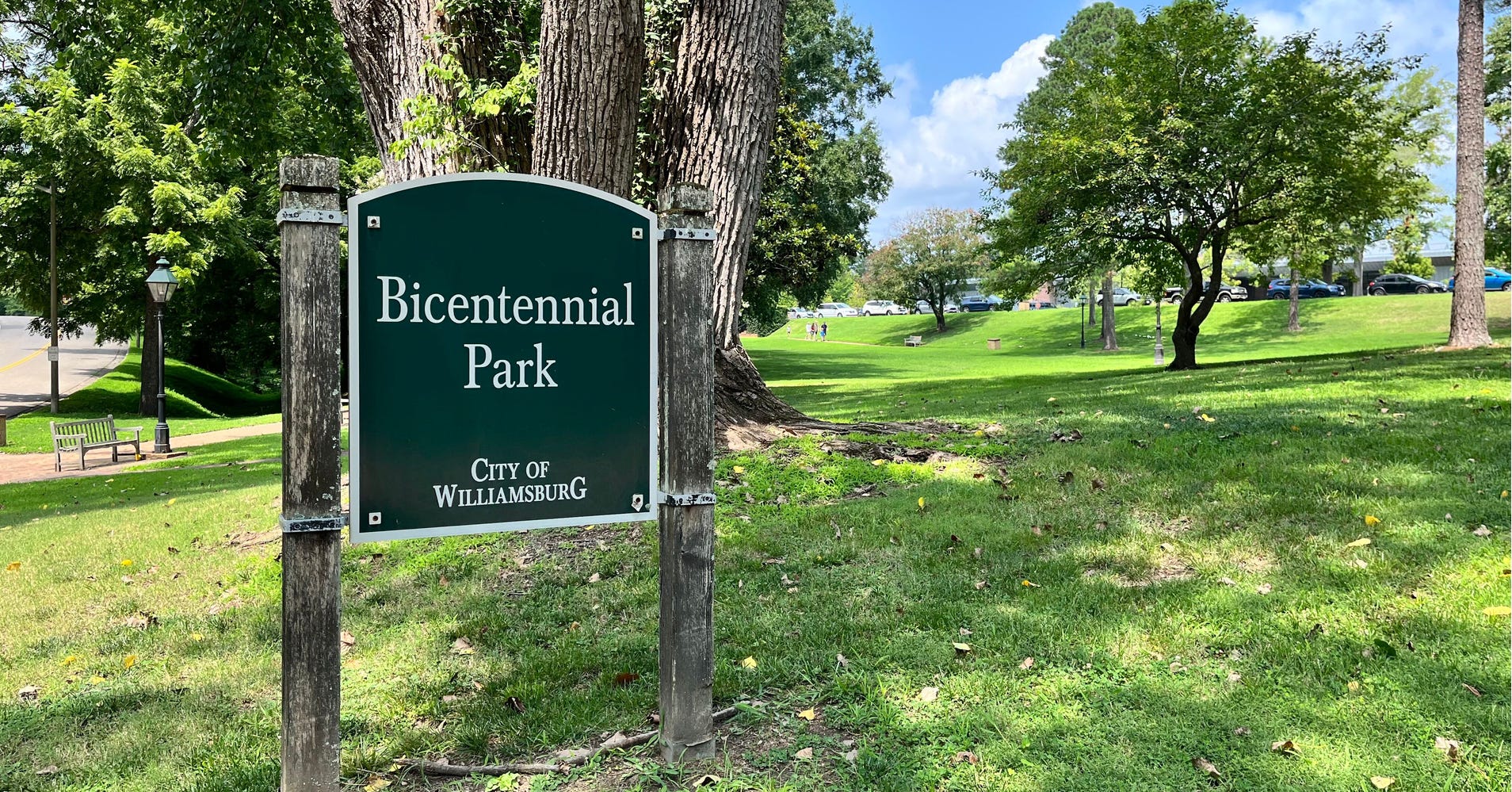
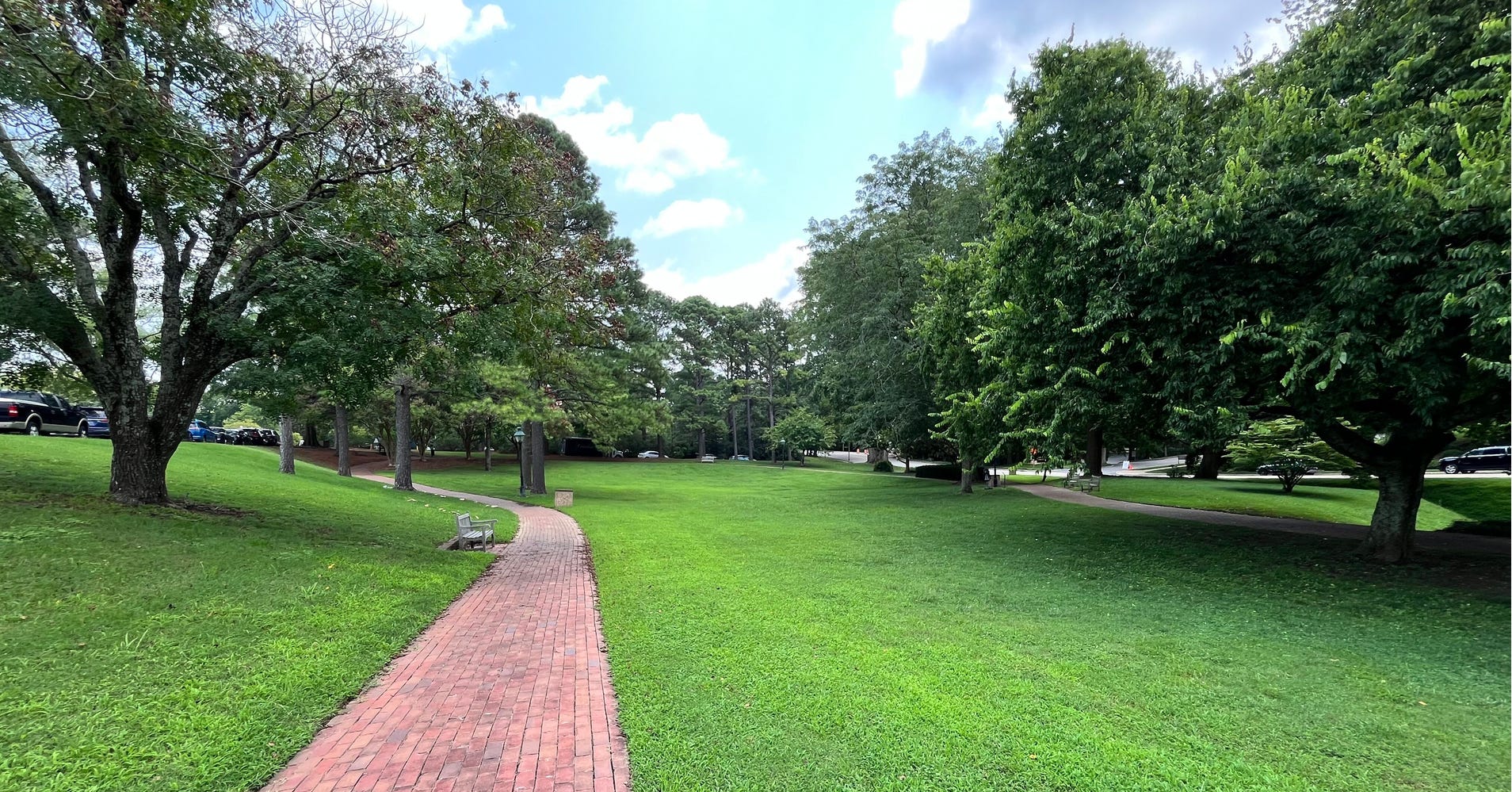
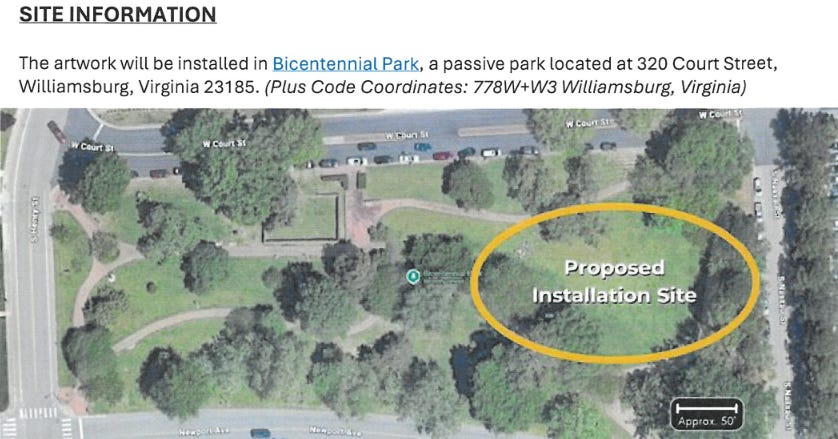
A canopy of colorful ribbons suspended over an existing walkway is the centerpiece of a new concept for a temporary public art installation in Bicentennial Park, which, if approved, would run from early October through mid-November 2026. A description of the concept was recently presented to the Williamsburg Public Art Council (WPAC), which advises the City Council on public art acquisitions, commissions and funding. The decision to move forward with the project would ultimately be made by the full City Council at an upcoming meeting, though two City Council members, Barbara Ramsey and Pat Dent, also serve on the arts council.
The proposal that the art council heard at their meeting on July 27, 2026 envisions colorful ribbons strung above a section of brick walkway. The idea includes using trees in the park and added support structures to create what staff described as an immersive, walkable display. The plan also calls for evening lighting, interpretive signage explaining a color-based storytelling theme tied to Williamsburg’s history, and a participatory element where visitors could add their own ribbons.
The City of Williamsburg is considering a proposed ribbon canopy that city officials describe as an immersive, community-oriented display transforming a Bicentennial Park walkway with lighting and signage.
Project development & costs
The city issued a request for proposals in May seeking what it described as a medium- to large-scale, light-centric installation for Bicentennial Park from qualified artists, designers or firms, though no vendor was ultimately selected. The RFP emphasized interactive elements such as LED lighting, projection mapping or motion sensors.
In June, the arts council reached a consensus to develop the current, more community-oriented concept centered on the ribbon canopy. As part of that approach, WPAC may also partner with Colonial Williamsburg to help shape a historical or interpretive framework for the display. The concept also calls for at least one "Pop-Up Park" event featuring activities such as a food truck, a bookmobile from the Williamsburg Regional Library, children's lawn games and live music.
The revised concept presents a not-to-exceed budget of $25,000, according to meeting documents. Potential expenses include:
Ribbon and suspension materials: outdoor-rated ribbon, hardware and fabric tested for wind and weather durability
Evening lighting: LED string, net or fairy lighting to illuminate the canopy after dark
Interpretive signage: modest signage along the trail explaining the color-based storytelling concept
Park seating: decorative pieces, such as spinning-top chairs, for visitors to rest and gather
Timeline and next steps
If approved, the project would follow a compressed schedule. Staff documents list arts council budget approval as the next step, then final plans and costs developed in August. City Council would then need to approve a long-term special events permit, alongside project fabrication, with installation targeted for early October. Public display would run for roughly four to six weeks, into mid-November, when the installation would be removed. The city says that final materials and structural details, including protections for trees and landscaping, weather resistance, overhead clearance and ADA accessibility, would be worked out in consultation with the city’s Public Works and Planning departments before fabrication begins.
In other news:
Regional arts group reports impact and grant timing
Separately, the Williamsburg Area Arts Commission (WAAC), a regional body distinct from WPAC, assists Williamsburg City Council, the James City County Board of Supervisors and other organizations in stimulating excellence in the arts and expanding cultural amenities for residents and visitors across the Historic Triangle.
According to a WAAC figures summary prepared in July 2026:
Commission: 9 commissioners — City of Williamsburg, James City County, York County (Bruton District)
5-year totals (FY23–FY27): 164 applications, 145 grants, $1,179,125 requested, $795,000 awarded
FY26 (July 2025–June 2026): 32 applications, 31 grantees, $232,150 requested, $159,000 awarded, 90,000+ attendees/participants
FY26 art categories: Music Concerts (64.5%), Lectures/Educational (38.7%), Stage Performances/Dance/Theatre (35.5%), Children’s Programming (35.5%), Festivals (19.4%), Visual Arts (16.1%)
The Williamsburg Area Arts Commission accepts grant applications each year for programs serving the Historic Triangle. For the FY28 cycle, application forms are posted on WAAC’s website by October 1, 2026, with completed applications due to the Commission by December 1. Applicants must clearly itemize costs in the WAAC budget form; projects completed before the funded fiscal year begins are not eligible. WAAC Commissioners begin reviewing requests in December and recommend funding levels for inclusion in the City of Williamsburg’s and James City County’s annual budgets. Award notifications follow in late June, after both localities finalize their budgets — FY28 grantees would be notified in late June 2027.
Additionally, the Williamsburg Area Arts Commission will host a joint meeting with York County’s Art Commission on August 26, 11 a.m.–2 p.m., at the Muscarelle Museum of Art, featuring a museum tour, lunch and discussion.
Architectural Review Board weighs requests from new restaurants on Prince George Street
The Architectural Review Board recently tabled an application from Seven Hills for its outdoor dining parklet on Prince George Street over compliance concerns. At the board’s July 14 meeting, staff said string lighting and hardware on the parklet and building façade lacked prior approval, since current guidelines bar exterior wiring. The applicant said the equipment predated their occupancy and they were unsure who was responsible for removal. Members also questioned whether the layout exceeded the 360-square-foot limit and whether proposed chairs met furniture rules. The board tabled the item pending scaled drawings, a chair sample and an updated lighting plan.
The board also considered two matters involving Ricky’s Wine Bar on Prince George Street. An application to replace shade triangles was tabled after a color dispute: the applicant preferred a sand tone while staff recommended terra red to match the brick, and members asked for an accurate sample. Separately, the board gave conceptual feedback on a proposed louvered pergola for the same parklet, calling the design visually compatible but flagging engineering challenges since footings could not be drilled into the street. No formal vote was taken, pending further engineering review.
James City County Completes Grove Area Road and Drainage Upgrades
James City County shared a video about recent infrastructure improvements completed in the Grove neighborhood. The project involved restoration of roadway systems and stormwater drainage infrastructure designed to enhance water management in the area. The centerpiece of the project was the installation of a new box culvert carrying water beneath Railroad Street. The county undertook multiple construction phases to address the neighborhood’s infrastructure needs. These improvements have enhanced drainage functionality and roadway conditions throughout the Grove area for residents.
The 2026 Virginia Cat Festival, produced by AVAdventure Productions and sponsored by the City of Williamsburg, will be held November 7-8 at the Greater Williamsburg Sports and Events Center. A discounted Weekend Badge is available through July 31, priced the same as a single-day ticket; rates rise to $40 on August 1. Programming includes a vendor marketplace, workshops with cat experts, adoptions, meet-and-greets, a costume parade and other cat-themed activities.
Historical Myth-Making Around Colonial Figure
JYF Museums shared a video exploring how historical narratives become distorted over time through the combination of colonial literature and modern archaeological methods. The episode examines the gaps between what historical sources actually tell us and the popular myths that develop when different disciplines attempt to reconcile conflicting information.

Buy me a coffee | Leave a tip on PayPal | Tees on Etsy