Overhaul of Downtown Williamsburg Zoning Possible with New Comprehensive Plan
Mixed-used, higher density could be approved before plan’s final completion

The City of Williamsburg recently closed a Request for Proposals (RFP) from consultants to help write a new Comprehensive Plan. The city has allocated a total of $600,000 spread over two years to hire the still to be announced consultants. While the overall process could take several years, city leadership plans to consider incremental zoning changes before the final plan is adopted.
The Comprehensive Plan is the city’s primary guide for land use, growth, housing, transportation, infrastructure, and community character. Under Virginia law, these plans must be updated periodically, and local zoning decisions must be consistent with the plan, which affects zoning and special use permits. The city’s last update to their plan was in 2021, but city officials contend that an update is warranted given changes in economic conditions, housing demand, and state land-use legislation.
The consultant selected by the city will be tasked with helping set the city’s vision, policies, and goals, including:
Housing & Density - density locations; scale & character; affordability; preservation
Economic Development and Market Analysis - diversification, retail viability, corridor revitalization
Connectivity and Transportation - 15-minute neighborhoods, infrastructure gaps, street network
Process and Implementation - phased delivery, public input, data tracking
Resilience, Infrastructure, and Public Health
Incremental zoning changes
The RFP indicates that consultants will be expected to produce incremental recommendations that City Council may review and approve as they are completed. Areas of focus for near-term action by the council include land-use in areas of the city experiencing high demand for housing. If approved, those components could prompt amendments to the zoning map or zoning text that would later be incorporated into the completed Comprehensive Plan.
City officials have outlined several reasons for taking zoning actions before the Comprehensive Plan is finalized. They note that development activity is continuing under existing regulations, and staff have asserted that relying on outdated policies during a multi-year planning process could result in outcomes that conflict with emerging goals. They also point to potential changes in State law that could curtail local oversight of development.
Downtown “vibrancy”
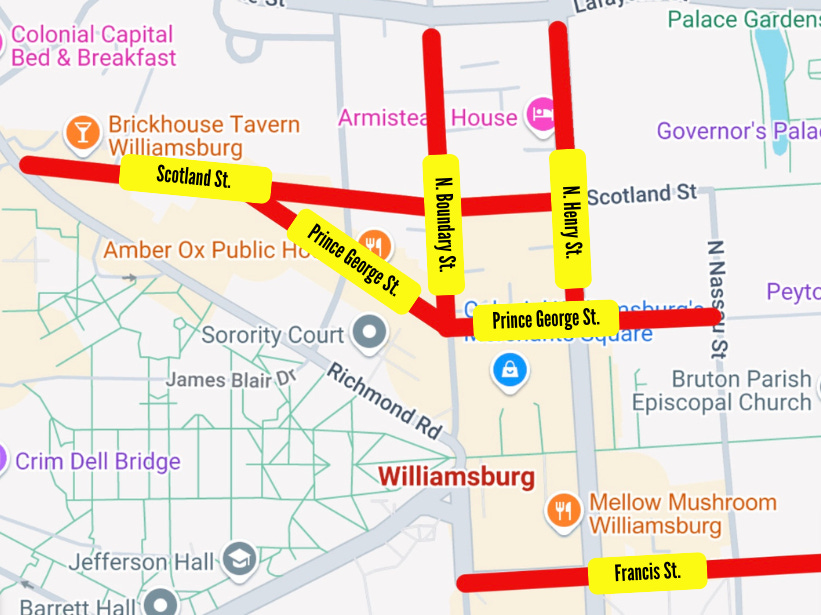
The incremental approach likely will incorporate ideas presented in past planning efforts, particularly the 2018 Downtown Vibrancy Study and the city’s recent outline of Goals, Initiatives and Objectives. Suggestions being considered include substantial increases in residential density in the downtown B-1 zoning district. While current zoning permits 14 units/acre, the proposal recommends 36 to 64 dwelling units per acre. These new units could include new types of architecture such as stacked townhomes and elevator flats, as the study proposed changing the maximum height in the downtown district up to four floors. Many of the study’s recommendations would affect specific streets, including Henry, Scotland, Prince George, Francis and Boundary Street.
The city also presents goals to redevelop other downtown sites. For example, the city owned Triangle Building could be replaced by a new entertainment district. The Blayton Building, which serves as public housing for elderly residents, could also be torn down. One idea for that land is to create a mixed-use development, perhaps with a grocery store, on what the city considers a prime spot near the College of William and Mary.


Another idea envisions restaurant-focused redevelopment along Scotland Street. Williamsburg also expresses interest in seeing Colonial Williamsburg redevelop a large parking lot (P6) near Merchant Square.
Williamsburg leadership also has expressed interest in finding other new ways to meet housing demand. For example, new State code allows tiny houses of less than 400 square feet, as well as other types of accessory dwelling units (ADUs) to be included in comprehensive plans. The city has stated a desire to expand the use of ADUs in the city to improve affordability and support aging in place as part of the recent GIO.
Transformed streetscapes

Along with new buildings, city leadership envisions significant changes to the design of downtown streets. The plan outlines three downtown street types to guide future design and investment.
“Premier Streets” are envisioned as the active heart of downtown, with curbless, flexible designs that allow streets to function as plazas for events, using pervious pavers and removable bollards; these are proposed for Scotland Street, Prince George Street, and areas near the future City Park.
“Quality Streets” serve as transitional routes into the core, maintaining traditional curbs and asphalt roadways while adding enhanced sidewalks, bike lanes, and street trees, particularly on streets surrounding the Triangle District.
“Greened Streets” are intended as welcoming, landscaped connectors, emphasizing mature trees, shade, and standard street layouts with shared bicycle markings, with Boundary Street identified as the primary corridor linking key activity areas.
Town & Gown
Student housing is a central and often contentious element of Williamsburg’s comprehensive planning process, highlighting frequently competing goals of accommodating William & Mary’s student housing needs while preserving historic neighborhoods. According to the city, previous efforts have focused on directing higher-density, student-oriented development to designated areas such as Midtown, High Street, and parts of Downtown, using these zones as relief valves to reduce pressure on single-family neighborhoods.
Documents indicate that city planning assumptions rely heavily on the university’s goal of housing 70–75% of undergraduates on campus, but recent shortfalls have intensified off-campus demand. In response, full-time residents and homeowners continue to warn that investor-owned rentals, rising rents, and weak enforcement of occupancy limits threaten neighborhood character.
Designated agents & regulatory pressure
Recent state legislation fundamentally alters the local planning process by removing planning commissions from the review and approval of subdivision plats, site plans, and development plans, assigning this authority instead to a “designated agent.” Council appointed the city’s planning director to the role, and State code demands that submissions are reviewed strictly against the city code and ordinances, which is meant to ensure that approvals are administrative rather than subjective. This shift is accompanied by another new law, which shortens the timeframe for the agent to act on initial proposals from 60 days to 40 days and mandates administrative approval for compliant resubmissions.
Critics of the changes have noted that they reduce local control over zoning decisions by removing public bodies like the Planning Commission and City Council from specific technical reviews. Additionally, city officials have pointed to uncertainty surrounding future state mandates, some of which have been considered but not approved by the General Assembly. These included bills mandating housing growth targets, allowing multifamily development by right in commercial areas, further limiting planning commission and architectural review, and requiring cities to offer public land for affordable housing first.
The writer used AI tools and the following sources:
Bid Postings • City of Williamsburg Comprehensive Plan Update (Webpage)
RFP 01-8101-2026: City of Williamsburg Comprehensive Plan Update
RFP 01-8101-2026 Comprehensive Plan Update Questions and Answers
HB 2660 Streamlining Virginia Subdivision Approvals and Site Plan Reviews (PDF)
The Williamsburg Independent doesn’t run ads or pursue sponsors. But we do sell logo t-shirts and run an online bookshop …


The tension between campus housing goals and neighborhood preservation is fascinating. W&M's 70-75% on-campus housing target creates spillover effects that the city is trying to manage through zoning, but the state's new designated agent rules strip away local planning flexibility exactly when its most needed. Dealing with something similar near my local university where higher density near campus became inevitable once enrollment expanded.