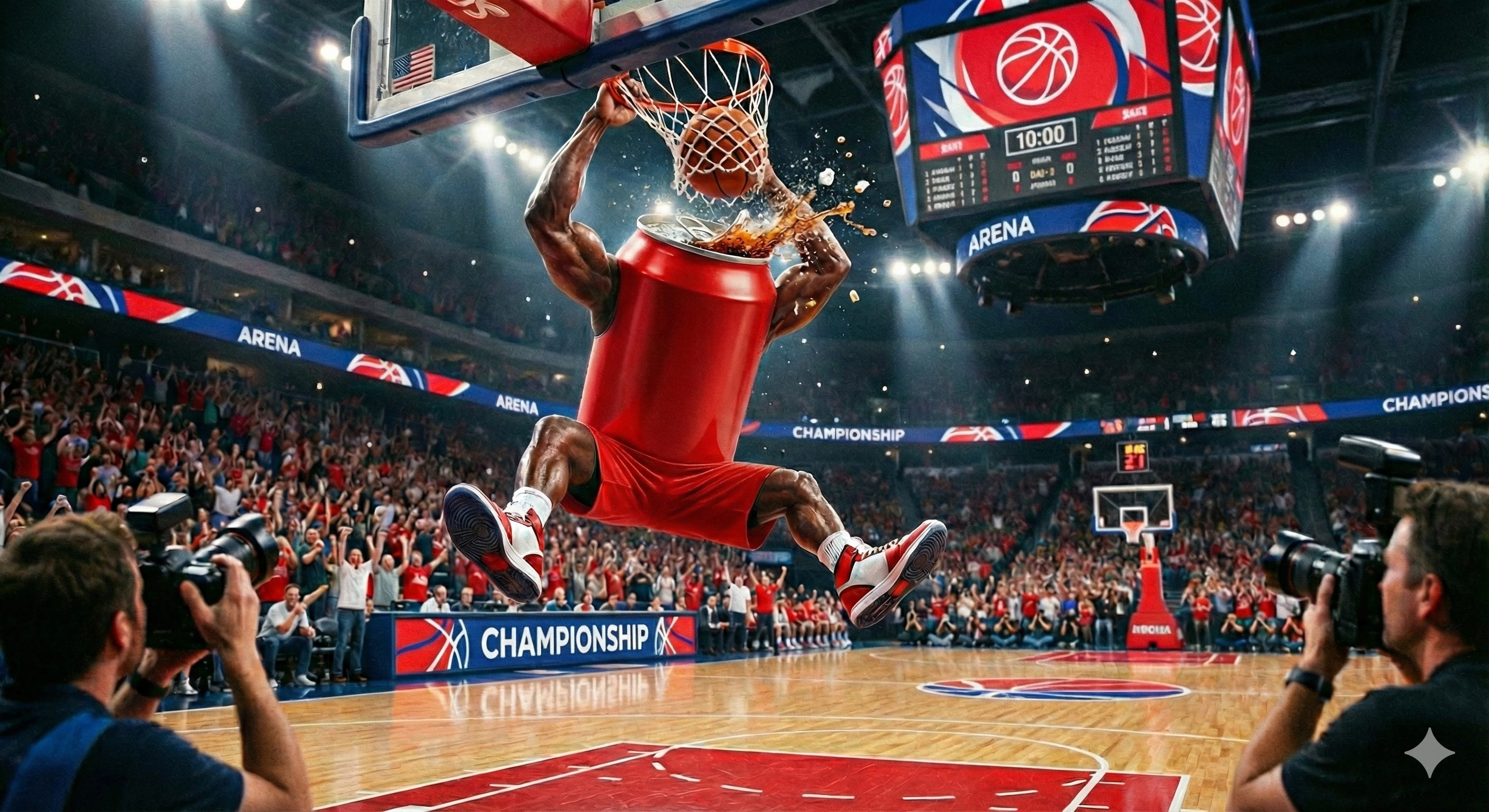
Is Coke the G.O.A.T. for Williamsburg sports venue? Or is Pepsi Next?
“Pouring Rights” competition heats up for regionally-funded Greater Williamsburg Sports and Entertainment center

The Board of Directors of the Historic Triangle Recreational Facilities Authority (HTRFA) met Wednesday, Feb. 11, 2026, to receive updates about the construction and future operations of the Greater Williamsburg Sports and Entertainment Center (GWSEC), the $80 million, 200,000-square-foot indoor complex expected to open by August. The meeting agenda included a closed session to discuss pouring rights for the venue—exclusive contractual agreements with beverage manufacturers (typically Coca-Cola or PepsiCo) that grant a company sole rights to sell and market products across the facility’s vending machines, dining areas, and athletic venues.
In exchange for exclusivity, beverage companies provide significant financial benefits including upfront payments, annual sponsorship fees, and sales-based commissions, while contracts typically require institutions to display company branding and use vendor-provided equipment. While these agreements generate funding for scholarships and operations, they face criticism for commercializing public spaces and promoting consumption of unhealthy food and drinks.
Pouring Rights: Coke vs. Pepsi
The amount of visitors expected to visit the sports complex represents substantial beverage sales potential. Given the competitive beverage market, HTRFA is likely well-positioned to negotiate favorable terms for pouring rights.
Two Virginia universities demonstrate how Coca-Cola and PepsiCo compete for exclusive pouring rights using contrasting strategies—insights that may inform HTRFA’s negotiations for its sports complex. Coca-Cola’s ten-year deal with George Mason University emphasizes guaranteed revenue, offering over $600,000 annually in fixed fees regardless of sales—nearly $7 million total. Meanwhile, PepsiCo’s agreement with Old Dominion University features lower guarantees ($204,000 annually) but substantial per-case rebates and vending commissions that reward high consumption.
While beverage agreements at universities can reach millions of dollars, Williamsburg-James City County Schools’ more modest contract with Coca-Cola illustrates how these partnerships operate across different types of public institutions at varying scales. The contract specifies that only diet, zero-sugar, or water-based options are provided, including Diet Coke, Sprite Zero, Dasani, Smartwater, reduced-calorie Powerade, Minute Maid juices, and Gold Peak teas. The district’s FY26 budget projects $17,500 in vending revenue through Child Nutrition Services, supporting the district’s meal programs.
Public health concerns
Public health advocates warn that the proliferation of pouring rights contracts compromise community health by marketing products linked to obesity and diabetes. For example, the issue of youth targeting is particularly concerning to many in the community, who feel that schools and recreational facilities shouldn’t become advertising platforms for unhealthy beverages due to financial pressures. Studies indicate that beverage marketing has become central to many camps, tournaments, and sporting events where kids associate brands with athletic success.
The beverage industry frames pouring rights as practical partnerships funding programs stretched budgets cannot support while reducing taxpayer burden. Companies emphasize voluntary marketing standards, healthier product options, and support for scholarships and sustainability. Critics of the beverage industry argue that voluntary industry guidelines contain loopholes allowing companies to claim they’re not directly focusing marketing on youth.

Other issue addressed at the meeting included:
Facility construction update
Recent milestones include completed maple gym flooring with epoxy flooring scheduled to finish by late February. Turf roll insulation began in January, with full turf system installation ongoing throughout February. The first equipment shipment recently arrived at port and is expected on-site shortly. Parking lot asphalt paving is scheduled for March. Other reported progress included:
Sports Courts (PEMB): 85% complete—maple floor installed with floor protection in place for turf installation; interior storefronts being installed in breakout spaces
HUB Space: 75% complete—storefronts being installed at future gym; casework installed throughout building; front desk and longboards installed
Site Work: 70% complete—site fencing removed; concrete work in plaza area ongoing (weather permitting)
Operations update
The Board received receive presentations regarding the facility’s operational progress, including recruiting new events:
Total breakdown: 50 sports events and 30 non-sport events
2026: 22 events scheduled—13 non-sport (8 definite, 1 tentative, 4 prospects) and 9 sports (6 definite, 2 tentative, 1 prospect)
2027: 38 events planned—26 sports events and 12 non-sport events (peak activity year)
2028: 19 events scheduled—14 sports and 5 non-sport
2029: 1 confirmed sports event
Prospective events include:
iShine Car Show
Triple Crown Sports
NIKE Volleyball Camps (fundamental skills camp)
LOVB Volleyball Tournament (2027/2028)
VA CatFest 2027
BurgQuest 2027
Proposed facility use rates for local community
A tiered pricing structure was proposed for community access, including local residents, park and rec departments, schools, and municipalities:
Drop-In & Open Play
Youth ages 0–11: $3 residents, $6 non-residents
Junior ages 12–17: $4 residents, $7 non-residents
Adults 18+: $5 residents, $8 non-residents
Punch cards: $40 for 10 visits or $60 for 20 visits
Adventure Gym
Toddlers ages 0–5: $5 for 2-hour play sessions
Youth/Junior ages 6–17: $12 for unlimited play (non-residents add $5)
Monthly unlimited: $40 residents, $60 non-residents
Annual unlimited: $440 residents, $660 non-residents
Sports & Meeting Spaces
Basketball courts: $75/hour (full gym of 12 courts: $10,000/day)
Volleyball courts: $40/hour
Turf: $295/hour for one-third field, $1,050/hour for full turf
Flex rooms: FREE
Breakout rooms: $500/half day
Conference rooms: $600/half day
Banquet hall: $2,500/half day
Parks & Recreation Structure
Recreational Sports Programs:
Courts: FREE (Monday–Thursday, 4pm–close)
Basic meeting spaces: FREE during active seasons
Premier spaces: 50% off standard rates
AAU/Affiliate Programs:
Courts: $20/resident per season
Turf: $150/hour
Local Schools:
Courts: $50/hour
Turf: $200/hous
Municipalities:
Courts: $25/hour
Turf: $150/hour
Premier spaces: Two single-day events (Friday–Sunday) and four single-day events (Monday–Thursday) at specified terms
The writer used AI tools and these sources:
Old Dominion University - Beverage Pouring Rights Contract - PepsiCo
George Mason University - Beverage Pouring Rights Contract - Coca Cola
“Marketing of sugar-sweetened beverages to youth through U.S. university pouring rights contracts” - Preventive Medicine Reports - February 2022
“Youth Sports Complex Scores Millions In Pepsi ‘Pouring Rights’ Deal” - Forbes - August 22, 2013
“80 Percent of Public Schools Have Contracts With Coke or Pepsi” - Mother Jones - August 15, 2012
Other ways to support the Williamsburg Independent

Informative, thanks for the updates.