Agency serves 230+ Williamsburg residents for mental health and developmental needs every year
Colonial Behavioral Health presents agency update to City Council; $306K in funding from City recommended for FY27

Earlier this month, the Williamsburg City Council received a presentation from David Coe, the executive director of Colonial Behavioral Health (CBH), one of the region’s most important mental health organizations. During his presentation on February 12, Coe provided an overview of the agency’s operations, funding structure, service demand and future initiatives to the Williamsburg City Council.
“So we are on pace this year to double the number of agency intakes that we had in previous years … with those individuals that are coming in, we’re finding that the cases are more complex than they used to be,” Coe told the council. “There’s a lot more out there to affect the folks that reside in our communities and their lives just get more complicated more quickly, so we see that consistently. We have an increased focus which we believe is a very positive mood toward trauma-informed care and we are increasing our focus on prevention and wellness efforts,” he added.
Established in 1971, Colonial Behavioral Health (CBH) serves as the region’s Community Services Board and a vital safety net, providing public behavioral health, developmental disability, and substance use services to residents of Williamsburg, James City County, York County, and Poquoson. Operating under a unique dual structure as both a state-mandated entity and an unincorporated nonprofit, the agency’s mission centers on promoting recovery and resilience through a comprehensive continuum of care. This approach addresses both immediate emergencies and long-term stability by offering a wide range of services, including 24-hour crisis intervention, outpatient counseling, psychiatric care, early childhood intervention, case management, and residential support.

Community needs and funding
According to Coe, over the past five years, the agency has served over 230 Williamsburg residents annually, a figure that remains slightly lower than the pre-pandemic average of 258. He noted that while service utilization dipped during the height of the pandemic due to vacancies and client hesitancy, demand has since rebounded.
To meet this need, the agency restructured its “front door” intake and assessment system, an improvement which Coe reports has put the agency on track to double the number of intakes in FY26 compared to prior years by reducing barriers to care. The growth expands on already high numbers. For example, the agency served 3,642 individuals regionally and recorded over 63,000 staff interactions the year before. This regional population included 2,512 adults, 706 youth, and 424 older adults, with a client demographic that remains evenly divided by gender at 50.3% male and 49.7% female.
Operating on a large scale, CBH had a total Fiscal Year 2025 budget of $24.47 million, funded primarily by state and federal grants ($12.7M) and Medicaid ($5.9M). Within that broad budget, the City of Williamsburg provides specific local support to fill funding gaps, contributing $306,000 in FY25 and $298,000 in FY26. Looking ahead to FY27, one of the city’s advisory boards has recommended an allocation of $306,940, which would be a slight increase over the previous year.
Plenty of need, limited space
The resurgence in behavioral health demand is compounded by increasing complexity, as clients frequently present with overlapping challenges involving the criminal justice system, housing instability, and school systems. Executive Director David Coe emphasized that these intersecting socioeconomic pressures have led the agency to prioritize addressing root causes. However, severe space shortages at state facilities exacerbate these treatment hurdles. For example, Eastern State Hospital typically operates at capacity with forensic patients involved with the State’s legal system, such as those transferred from jails or found not guilty by reason of insanity—leaving few available beds for other acute community crises.
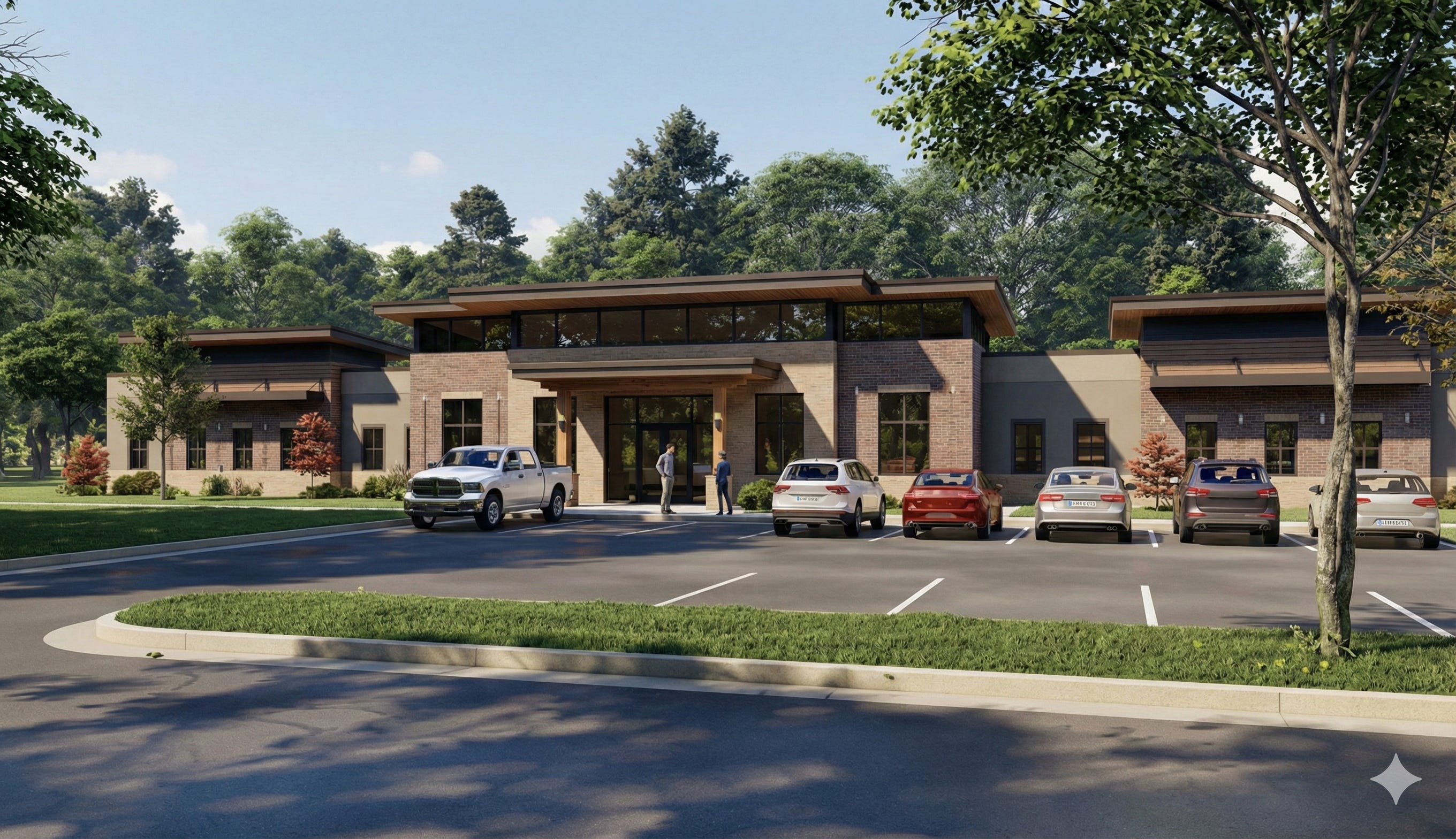
In response, Colonial Behavioral Health is advancing the Center for Support and Wellness as a community-based alternative to hospitalization. Currently, the lack of local beds forces individuals in crisis to be transported to distant facilities in Northern Virginia, Marion, or Staunton, a practice that strains families and local public safety budgets. Scheduled to open in fall 2026 via a $12.5 million state grant, this new facility will provide local 23-hour observation chairs and an eight-bed crisis stabilization unit specifically designed to intercept these crises and keep care within the community. Funded through the state’s Right Help Right Now initiative, the center is scheduled to open in fall 2026. The facility will include 23-hour observation chairs designed to stabilize individuals in crisis as well as an eight-bed crisis stabilization unit for short-term residential care.
The agency continues to face pressing challenges, most notably a nationwide workforce shortage driven by competitive hiring markets and high stress levels. “I’m sure you’d be surprised to see that we had recruitment and retention issues, workforce issues; nobody else has those, but those are unique to us of course,” Coe said in jest, while acknowledging the seriousness of the issue. He noted that these staffing difficulties are compounded by persistent financial pressures, including uncertainty in state and federal funding streams and Medicaid reimbursement rates that often fail to fully cover the actual cost of developmental disability services.
Expanding services
Colonial Behavioral Health is actively expanding its regional impact through a multifaceted strategy that pairs immediate emergency response with long-term stability initiatives. The agency has integrated into specialized emergency dispatch systems to ensure mental health professionals are involved in behavioral health calls, while its on-site crisis teams provide direct stabilization in homes and schools to divert individuals from hospitals and law enforcement intervention. Beyond emergency care, the agency addresses the root causes of crisis by increasing access to integrated housing for vulnerable adults transitioning from institutional settings and leading community-wide substance use prevention and harm reduction efforts.
Marcus Alert System
CBH also participates in Virginia’s Marcus Alert system, named in memory of Marcus-David Peters. The program, overseen by the Virginia Department of Behavioral Health and Developmental Services, coordinates 911 and 988 call centers to ensure that behavioral health professionals are dispatched to appropriate emergency calls. While participation is optional for jurisdictions with populations under 40,000, Williamsburg has elected to opt in. The system is intended to improve outcomes by pairing law enforcement with trained clinicians or, in certain situations, sending mental health professionals as primary responders.
Mobile Crisis unit
In addition, CBH recently launched a Mobile Crisis unit that sends clinicians directly to homes, schools and other community settings. The service aims to de-escalate situations before they require hospitalization or law enforcement intervention. By responding in familiar environments, clinicians can often stabilize individuals more quickly and connect them to ongoing support.
Permanent Supportive Housing
Housing stability remains another focus area. CBH has expanded Permanent Supportive Housing options for adults transitioning from incarceration, hospitalization or the closure of facilities such as the House of Mercy. These programs combine affordable housing with case management and behavioral health services, helping individuals maintain stability and reduce the likelihood of returning to crisis systems.
Drug Take-Back Days
Substance use prevention and harm reduction efforts also continue. CBH partners with the Drug Enforcement Administration on National Drug Take-Back Days, providing safe opportunities for residents to dispose of unused or expired medications. The agency distributes medication lock pouches and safe disposal kits to reduce accidental ingestion and misuse.
Throughout the presentation, Coe underscored CBH’s role as both a healthcare provider and a public safety partner. By offering crisis response, prevention services and long-term supports, the agency works to reduce strain on emergency rooms, jails and law enforcement. As demand grows and service needs become more complex, CBH’s ability to maintain stable funding, recruit qualified staff and expand community-based alternatives will continue to shape the region’s behavioral health landscape, something which affects us all.
The writer used AI tools and these sources:
Other ways to support the Williamsburg Independent